
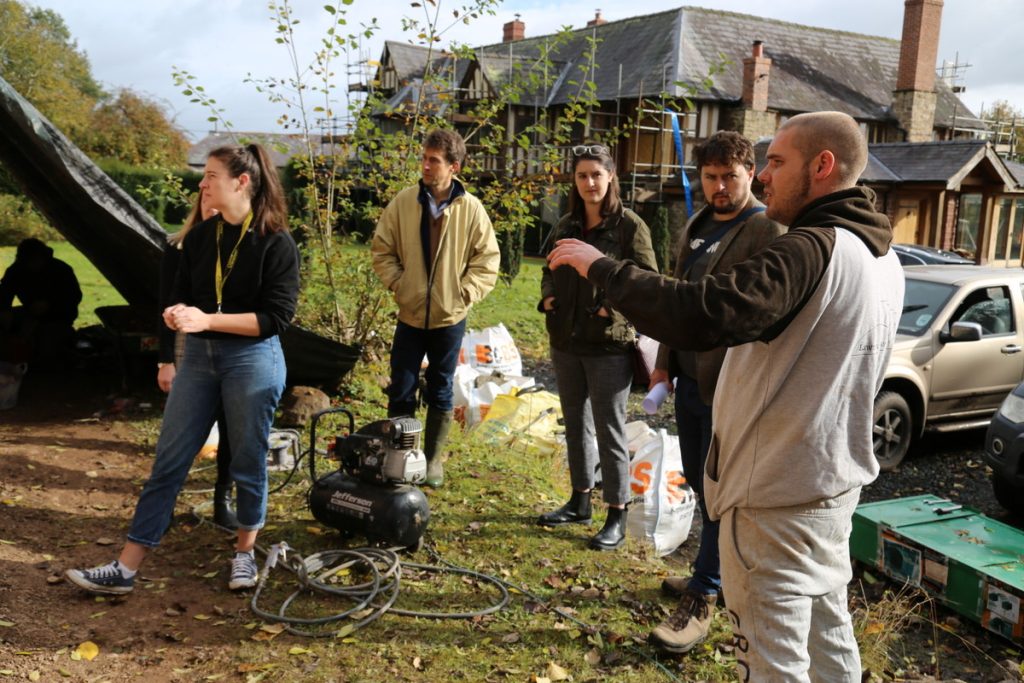
Our conservation consultancy helps owners turn an understanding of their building into an achievable plan. We consider its history, construction, condition and the owner’s aims together.
From assessment to specification
- Identify defects, earlier alterations and materials that need attention.
- Discuss repair priorities and the proposed scope of work.
- Help develop a brief, repair specification and schedule.
- Work with architects and other specialists on drawings and supporting documents where needed.
Working with the project team
We can assist with conservation discussions and coordination between owners, designers and contractors. Project-management and expert-witness services are described separately.
Materials and workmanship
Our advice draws on practical experience of traditional materials and repair methods. Related guidance covers timber-frame repairs, listed-building repairs, insulation and choosing a conservation contractor.
Contact us to discuss your property
Heritage Consulting – looking after old buildings
Our Heritage Consulting work is broad in its nature. Typically, we will undertake a building survey, or if the client already owns an old building, perhaps with damp problems, we investigate. We will either prepare a full written report, or a short summary that is then used to prepare an action plan, or to inform a full scale renovation. We work with Conservation Architects, providing input to design and specification that can be used to prepare a Listed Building Consent application. We examine materials to be used, helping to specify breathable solutions that can work within the guidelines of building regulations and current legal constraints. Heritage Consulting also encompasses legal aspects of Listed Buildings – working out whether a building has been changed illegally – for example damp proofing – even drilling the holes for useless chemicals amounts to criminal damage of a Listed Building.
Often our Heritage Consulting work involves working with Local Authority Conservation Officers to specify repairs and alterations to a building – all too often we see schemes of work that have been submitted to Conservation, which are utterly inadequate, resulting in costly delays to work for the client, and frustration all round. It is important that you employ a Heritage Consultant who knows the rules, and knows the materials – this way, a plan goes in for approval that will pass muster, first time.
In summary – this is how we work:
- Surveying the building – identifying problems and what materials are used to build it
- From the survey, identify what has been done to the building since it was built – what modern materials exist
- List any physical issues needing attention – drainage, repairs, physical defects, roof, walls and so on.
- Obtain client brief – what are the client’s wishes for the building? What is the budget?
- Are they legal? Can it be done?
- Help prepare architects brief which will include historical assessment, materials specification, repairs schedule
- Work with architect as Project Manager.
Building / Restoration projects are sometimes complex, and things change constantly. What does NOT change is the overall ethos – the use of traditional materials, breathability, adherence to sound Conservation Principles.
What is NEVER needed is any form of damp proofing – but effective ventilation is an essential part of ALL buildings, and a sound understanding of how to achieve this is vital.
The latest buzzwords of ‘Retrofit’ are just that – buzzwords. They form a platform from which chemical salesmen justify all manner of insulation, often combined with gimmicky ventilation (PIV, Whole House, MIV, MHR etc) We’ve never had to specify or use ANY of these, and never will. At most, we will make sure our clients understand the effects of moisture in their home – the difference between water as a gas, and water as a liquid. How the two states change, and why. Where does the water come from? How does it move in the building fabric, and when is it a problem? This little learning curve is vital – once understood, the veil of complexity lifts, and our clients are able to understand how to create and live a warm, healthy and dry lifestyle..
If you are considering an historic building Conservation Project, we are here to help. Repairs to Listed Buildings are a specialist area – not that it should be, it’s just that good working knowledge of traditional materials is hard to find. Putting that into the context of scheduling a project, specifying it, and actually making the project work, is a rare skill. We have to work with the legislation – which sets out guidelines for materials to be used, and the approaches we take to gain approvals for any changes to the building.
We work very closely to the ICOMOS guidelines. This might sound a bit grand – it’s not really – ICOMOS is all about looking after old buildings, and is the International body that gathers everyone’s knowledge and experience into one overall place. It’s a sort of clearing house for information about Built Heritage.
Historic building restoration is about doing it right. We use the word ‘Restoration’ as opposed to ‘renovation’ – Its the defining point between a Conservation Professional and Bodgit Builder.
There are not very many building conservation consultants out there. We work very closely to IHBC (Institute of Historic Building Conservation) guidelines – this used to be the Conservation Officer’s professional organisation – but it has widened its remit considerably recently. Sadly, IHBC is still a very political organisation, mainly run by town planners, and is not well known outside of a narrow conservation circle. I could try to sum them up as ‘well meaning’ – but like many of these organisations they are fond of rules and regulations, and not so good at being practical!
Historic England (the new branding for English Heritage) is still very much a political organisation, and you’ll find it hard to get any sense out of them on a day to day basis. It’s through our involvement and membership of IHBC that we are able to break the barriers and work with professionals within such organisations.
Call us to discuss a Building Condition Survey