
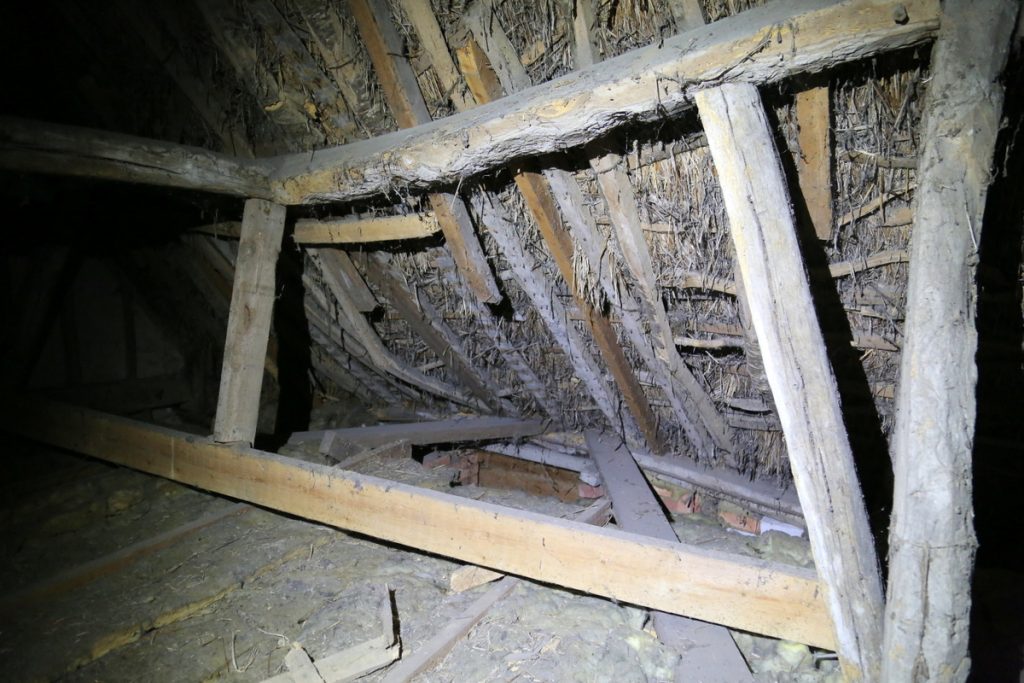
A timber and damp survey should explain any evidence, diagnose any problems and discuss solutions. It is different from a quotation for remedial treatment – marketed by the PCA as a ‘Timber and Damp Survey’. The name ‘Timber and Damp Survey’ was coined by the RICS and banking industry, in collusion with the PCA. A well informed and professional Building Survey covers all of the issues in one of these surveys. We only undertake ‘Timber and Damp Surveys’ when clients are told they must have one by lenders. They are essentially a full Building Survey – and cover all aspects of the building: External sources of moisture, lifestyle, ventilation, building fabric type, walls, floors, drainage. As such, they are not the same as a cheap £150 PCA attempt to justify damp proofing.
From £1,200
depending on location – survey pricing
Several hours
on site, and sometimes all day
BS 7913
the conservation standard we follow
Nothing to sell
no damp-proofing or chemical treatments
What the survey covers
A whole-building investigation
We look at the building’s construction, materials, setting and history of alterations. The investigation considers water entry, drains and plumbing, ground levels, roof, insulation, heating, ventilation, condensation and the condition of timber. We examine lifestyle of occupants – this often explains any issues – lots of cooking, showering, poor ventilation can tip a house over the edge and make it very damp.
Measurements in context
Equipment is selected to suit the investigation and may include thermo-hygrometers, thermal imaging and carbide testing. Findings are interpreted alongside the inspection rather than relying on a single meter reading.
A report you can use
The report explains the findings and practical recommendations. The scope and time needed depend on the property and the problem. See our survey-pricing guidance and contact us for a quotation.
Asked for a timber and damp report?
If a lender or another surveyor has requested a report, send us the wording and any existing survey so that we can discuss the appropriate scope. Our survey-advice section contains further guidance on reports and mortgage-related requests.
Our Timber and Damp Surveys
Our timber and damp surveys diagnose the real reasons for any dampness that may be present. We thoroughly investigate how the house is built, and what has been done to it over the years. We then show you how these factors come together to produce a pattern of possible problems – together with diagnosis and solutions. We don’t do free surveys – we make nothing at the end of it from selling useless chemicals – but we DO educate you about your house, and give you the confidence that it is NOT slowly sinking into a swamp or sucking up lakes of water via capillary action.
Our surveys can take several hours, and may take all day.
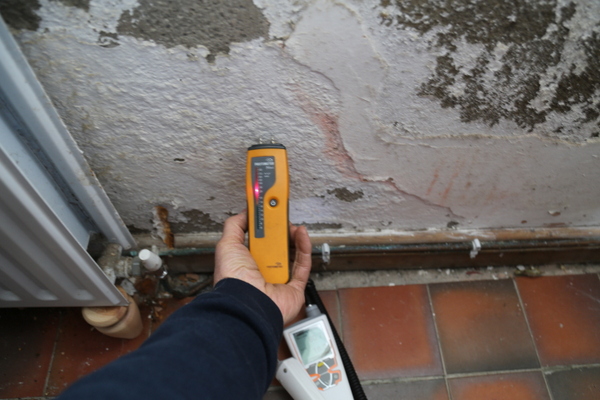
We do NOT use those silly ping prong ‘damp meters’, which are heavily, and wrongly promoted by RICS as ‘essential equipment’.
We carry an array of equipment – thermal imaging cameras, thermo hygrometer, probes of one sort or another, carbide meter (Carbide tests are still the only acceptable measurement of actual moisture that Courts will accept in legal cases). Pete actually does have a ‘damp meter’ which he uses to show how damp salesmen can con the public into thinking they need damp proofing. With a background in geochemistry, Pete KNOWS what is actually going on – the way salts are produced, where they come from, and why they are in your walls. And they aren’t there because of rising damp. ‘Damp’ meters – and their use in surveys has been roundly condemned – they are unsuited for use in building materials. Three British Standards – BS:5350, BS:6576, and BS:7913 all state that these meters are unsuitable for measuring moisture in building materials, and that chemical methods should be used. (We use chemical methods to confirm moisture levels if needed)
We are professionals – between us we have numerous degrees, and Chartered status – PCA ‘Surveyors’ have no academic status.
Building Societies and Banks are perfectly happy with our reports, which are far more detailed and technical than any produced by Property Care Association members. We continue to help if you buy the house, or if its already yours. In the report we suggest strategies for sorting any problems, and go through these with you in detail. We produce, if needed, a schedule of work, and specifications, so that you can instruct local trades and ensure that they do the job that is required – NOT what they think they should do. We can give a ballpark figure for what it should cost – helping take out the uncertainty of employing builders.
Many people have commented afterwards that they have experienced a very intensive day – but have learned more about their property in that one day than they would ever have learned on their own. Our attitude is that if you don’t fully understand your home, how can you look after it?
Have you had a report from a RICS chartered surveyor that recommends getting a PCA timber and damp survey? In our view that RICS surveyor is negligent and incompetent. If they don’t understand these basic concepts of how moisture affects a building, they should not be surveying anything.
Perhaps you think you may have a problem with damp. Don’t let damp get you down – there’s no such thing as Rising Damp – we have never in our collective experience seen it. It is also a VERY ENGLISH TERM. Have a look at the map at the bottom of this page if you don’t believe me! Rising Damp is a term that should stay on the telly with Leonard Rossiter. Every instance of damp can always be very easily and simply diagnosed. And it’s never rising.
The only thing we ever see rising is all the hot air from the damp company salesman. He will quote his useless Property Care Association qualifications of CSSW and CSRT and desperately try to flog yet another injection damp proof course, after the last three all ‘failed’ inexplicably. These are not qualifications – they have no academic meanisng and are just used to show membership of the club. He probably calls himself a damp surveyor. He writes a damp report – it’s a quote for injection damp proofing. We see ‘damp’ surveys from companies like Peter Cox Ltd, Rentokil, Kenwood, and Timberwise – all of which advocate totally unwarranted damp proofing. The solutions are simple – better ventilation, constant heating and fixing simple leaks to pipes and drains for example.
Pete has written the best selling book, The Warm Dry Home, which blows the Rising Damp myth out of the water and explains every aspect of dampness in your home in a clear and easy to understand way.
Most PCA ‘damp’ surveys are free, and take 10 minutes to arrive at the conclusion you have rising damp. They are useless, and fraudulently attempt to sell you thousands of pounds worth of unnecessary plastering and chemical injecting.
This extraordinary chart from Google says it all – search for Rising Damp – and see where that search term is concentrated globally. Note that the term just doesnt really appear in Europe!
Worldwide searches for Rising Damp
It is common knowledge that these meters do not measure moisture. RICS surveyors use them because they cannot be bothered to learn about water – the chemical responsible for 95% of building defects. It is barely taught at university. The RICS refuses to ban the use of these meters, and thus perpetuates the incompetence of their surveyors. Pete is co-author of the RICS JPS (Joint Position Statement), but they do not insist that their members work to the methodology. Pete’s view is that RICS is not fit for purpose, and their domestic surveys simply do not do justice to the buildings concerned. Here at Heritage House we probably see on average 4 or 5 incompetent RICS surveys a day – written by MRICS chartered surveyors who use damp meters. Often the reports state the client must get a ‘PCA timber and damp survey’ to diagnose the reasons for damp. Our clients are told to ask for a refund, and often take legal action against these uneducated RICS individuals. The reports they produce are useless. If you use a damp meter, you show that you fail to understand the cause of 95% of the defects you are supposedly there to survey.
Ask for your money back and get a decent survey from someone who actually knows how to properly diagnose damp issues. It is a source of constant annoyance to us that RICS still promotes or allows the use of these ridiculous damp meters, instead of educating Chartered Surveyors to properly understand the causes of dampness in buildings.
Timber and damp surveys in London and the South East:
We do a lot of timber and damp surveys in London – for which we have a separate fee schedule – these start at around £1200 plus vat and travel costs for smaller properties. Our team are based near London, so can keep costs down. Many of these surveys are for basement properties – often below ground, poorly ventilated, cold walls, and poor drainage.
Get a quote for your timber and damp survey
Send us the address and what you are worried about – or the wording your lender has asked for – and we’ll recommend the right survey and confirm the fee. Or call head office on 01746 862 640.
Why most timber and damp reports mislead
Have a look at the PCA syllabus for training their so called surveyors. It’s a 3 day course. It is peppered with words like ‘rising damp’, injection methods, siliconates, polyoxo aluminium stearate, polysiloxane / silane micro emulsions (horrible chemicals), timber treatment chemicals (which are even more toxic) – and bear in mind that one day of the three day course is devoted to learning all about the Control of Substances Hazardous to Health legislation, and how to safely use the toxic warfare they are about to unleash on your unsuspecting house.
The entire training course takes 3 days. At the end of it you have some pretty letters after your name. It takes 3 YEARS of study to get a Bachelors Degree, and about the same to become a Member of RICS. This is NOT a qualification – it is a joke. There is NO academic training – any monkey can get it and call themselves a ‘Timber and Damp Surveyor’… Don’t use anyone who has done a 3 day course and calls themselves a qualified surveyor – they are a fraud.
Do not let anyone with CSRT or CSSW after their names into your house – they are a fraud. They are NOT a qualified surveyor. It’s not even equivalent to an NVQ Level 1 – most of the people I’ve come across with these so called ‘qualifications’ are just former builder’s labourers.
Many of these surveys are done in minutes… This is a real email from one of my clients:
“Thanks for getting back, he (the PCA member) came just as we were having our lunch, he said not to worry, you just have your food and I’ll help myself around, I’ll only be 10 minutes. (10 Minutes?) He missed our master bedroom out after we made him aware that out one year son was in there having a sleep, when he came to the kitchen, I watched as he used the oh so familiar black and yellow Resistive Moisture Meter on our back wall, he slammed the back of it against the wall – nothing happened, then the prongs – which prompted a broken sound similar to those detectors that can route out live cables carrying current through them. (or was the battery running low due to over bloody use)
Not once did I see a carbide meter or a thermo hygrometer!
Anyway, after checking the outside rear, he said that’s it – I’m done!”
I cannot understand why the so called mortagage surveyor – who has to be qualified to degree level, and is a member of RICS – cannot properly diagnose the real causes of timber and damp problems in a house. Usually, there aren’t any. He will wander around with his silly little moisture meter, which records conductivity and does NOT record damp, and when he gets a high reading, tells you to get a timber and damp survey. A degree level qualified ‘RICS professional’, referring diagnosis to an uneducated, gormless PCA salesman. Its a breach of RICS professional ethics rules, but they won’t enforce it.
The terms below are taken from the wealth of survey reports we have here in the office – all of which are totally fraudulent, none of which have any basis in reality, and all of which have recommended treatments that were not needed and would never have worked, despite costing many thousands of pounds…
Some really good quotes from Damp and Timber Survey Reports:
‘The remedial damp proof course prevents water rising by capillary action. It is not designed to prevent free water entering the building due to high ground levels or a leaking water pipe etc’ Note the etc.. Thats the get out of jail clause here… Note also that water rising by capillary action has never been proven as a cause.
‘Where walls are externally rendered, the render at the base of the wall must be removed. A band of approximately 300mm is required at damp proof course level to allow accurate and effective insertion of our remedial damp proofing system.’ Well! Now we are removing the cause of the damp anyway – the cement render, and allowing the base of the wall to breathe – the damp course does nothing – but hey! They made some money out of you for nothing..
“Following the damp proof coursing and replastering works, the wall must be allowed to dry out. Research has shown that walls (under normal conditions) dry at the rate of 25mm per month. Therefore a wall 300mm will take one year. External render and coatings can significantly increase these drying times” Amazing, isnt it – they slip this one in under your nose – its the only true thing they can come up with – they don’t mention that the new plaster has the same effect as the external render, and stops the wall drying at all!
“Visual evidence indicates a problem of rising and penetrating damp in the wall marked for treatment. It was not possible to confirm this by instrumental readings because permission could not be obtained to carry out the tests. It is evident that the wall plaster has deteriorated” Note that we have two problems in the same place – Rising and Penetrating – and I’m really surprised they didnt lump Condensation in just for good measure. Of course, it couldn’t be confirmed with instrumental tests, but we still prepared a detailed map of the building with little red lines all over it telling us where we were going to get injection damp proofing.. We noted ‘deteriorated’ plaster, but we never actually attempted to properly diagnose why it was a bit grotty.
“The application of a tanking system will result in the tanked area being impervious to moisture. This can result in an increase in the level of moisture in the building. Should such condensation occur, you should consider improving ventilation of the building or installing a dehumidifier to reduce the condensation to an acceptable level” So we have just sealed all the water into the walls, we’ve stopped the building from breathing, and now we are getting more condensation than before. Amazing – we are even predicting what’s going to happen, and giving you the ‘out’ clause that any further problems are condensation related anyway!
“The method of moisture measurement involves the use of a Protimeter – this evaluates moisture by measuring the electrical resistance of the walls or timber. Unfortunately this can be affected with contamination of surfaces eg hygrscopic salts; metallic based papers and condensation. To carry out an accurate assessment of a wall does demand some destructive works following standard test methods outlined in BRE digest 245. If requested we will carry out a BRE 245 examination but such a test is beyond the scope of our normal inspection. High moisture readings were obtained from the areas indicated for treatment on the sketch plan. The pattern of the readings obtained indicated the presence of capillary rising dampness in the structural walls” Whew!! So we now agree that the protimeter doesnt work. We even managed to mention condensation as affecting the damp results… but failed to mention its the main reason dampness is present in the first place! But we diagnosed rising damp anyway. If you want the proper tests doing, well… they’re a pain in the butt, cost us money, take time, mean that we dont sell you a damp course, so dont bother. Oh, and by the way, you’ve got rising damp anyway – OK, so just sign here!
My nearly most favourite one is “the pattern of readings indicate that the damp course has broken down” I’ve never yet, nor have any of my colleagues, seen a ‘broken down damp course‘. The saddest situation I have encountered to date, is the case of Peter Cox, who went into a couple of ‘damp’ houses and diagnosed rising damp. They stripped the houses, and tanked and injected them. 3 years on, they were still wet. I found the reason – broken drains and a broken water main. When Peter Cox attended the property at the request of the insurers, I had the inestimable pleasure of tearing the surveyor apart – when I asked where the famous ‘broken down dampcourse’ was, and physically made him point to it, he nearly broke down. The grubby little man just did not know what to do – I have the whole thing on video, recorded by the homeowner. It’s wonderful to watch.
My favourite one is this:
We (the damp company appointed by the insurance company) undertook nitrate tests which indicated high levels of nitrates which are strong indicators of rising damp. As the results of these tests indicate high levels of nitrates, we would assume that the property for whatever reason is allowing external damp to enter the home…
The cause was so obvious it was blinding you in the face… A soil pipe from the apartment above was leaking copiously into the basement – and the floor was soaked. Soil pipe – gives a clue…. Urine – Urea – Nitrates… The Chinese collect it and make fertiliser from it! The insurance company, after two years fighting me, finally admitted complete responsibility, totally stripped and rebuilt the apartment, and paid my costs to the client.
Some of the things the Damp Companies say on their websites:
They get you in with statements that make them sound Oh SO convincing – we have access to laboratories, impressive backup facilities…. oh, and we aren’t tied to any particular supplier of chemicals – so we can buy the cheapest damp proofing garbage chemicals possible!
“As well as offering you our own expertise, we have impressive technical backing from our suppliers and the Property Care Association. Because we are not tied to any one chemical supplier we have available a range of scientific advice and also the use of remedial building research laboratories when necessary”
A worrying trend these days with damp companies is this – they try to draw you in with statements that they are ‘surveyors’. Check – the only qualifications these bozos will have is CSRT and CSSW – tick box hand outs from the Property Care Association which have no academic credibility:
“The fee paid ensures that you have a qualified surveyor reporting where there are problems, but, also most important, where there are not.
A surveyor – not a salesman”
They all tell you how long they have been in the damp proofing business – how they can put and end to your damp problems. They all claim long guarantee periods, even when the insurers have given up giving them insurance for more than 10 years at the most, and they never honour the guarantee anyway:
“XXX Preservation have over 25 years’ experience in dealing with damp problems. With our knowledge and expertise we can put an end to damp problems in your walls, roofs, and basement. All of our work comes with a 30 year guarantee and we are sure you will be happy with the quality of all our work and our extremely competitive prices”
Some things to avoid
GPI – Guarantee Protection Insurance – remember the PPI scandal – well this is the next one. We are working hard with banks, the real estate industry, and the RICS to make sure that everyone understands these guarantees are worthless. If you do claim, a chemical company will charge you to inspect (claiming you get the money back if there is work to be done) and then promptly ‘discover’ that the problem now isn’t rising damp (which they cured of course) but the same damp symptoms are now ‘condensation – which they don’t cover’.
Property Care Association – owned and run by chemical industry owners who have one aim in life – To Sell You Toxic Chemicals.
Sovereign – another chemical company
Triton – another chemical company
Wykamol – another chemical company
RICS surveyors waving damp meters – the root cause of most issues.