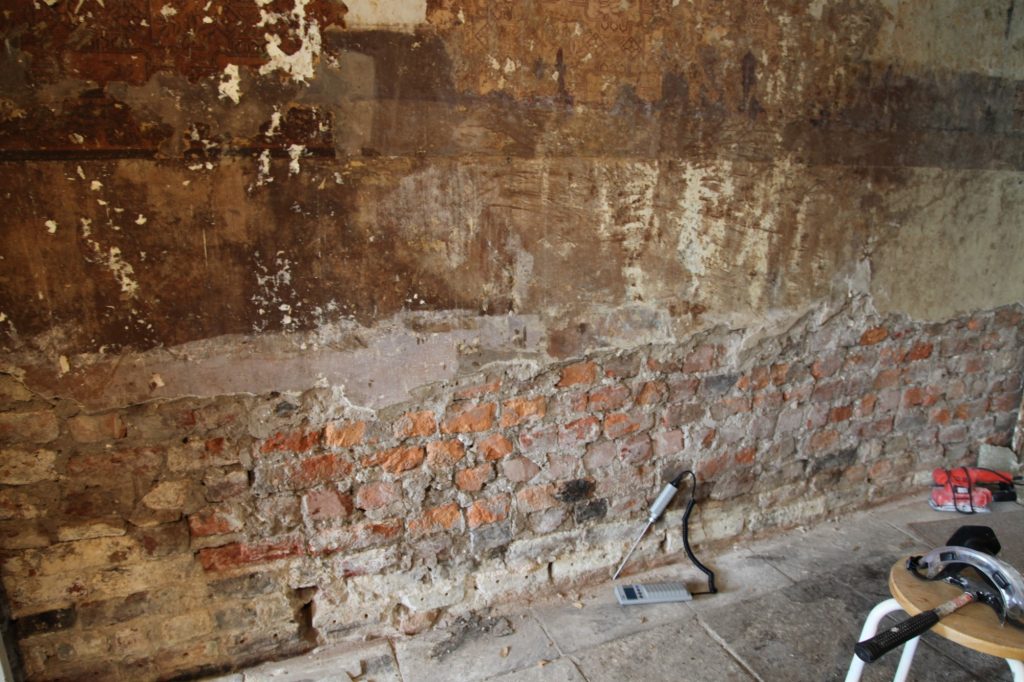
Built in the mid 1800’s, this was a farm workers cottage. It is built from Lancashire gritstone, with beautiful lime mortared joints, and lime plastered throughout. Most of the walls still have the Victorian paintwork hidden under layers of wallpaper. In an extraordinary discovery, the owner ripped up thick layers of damp proofing tar that had been poured onto the floor. Underneath were the most amazing stone slabs – running from the front door to the back door, and almost totally undamaged.
It is victim of dreadful savagery by successive local damp proofing yobbos. There are THREE separate injection damp courses. The typical 1 metre high removal of perfectly good lime plaster has taken place, and there was thick cement and gypsum plaster all over the ground floor walls up to a metre.
Check out the local Damp Proofing fraudsters..
All the ground floor walls were sopping wet behind the plaster. The floor was sodden, underneath the tar that had been poured all over it. The external walls are flaking and spalling from the cement that has been gobbed into the joints.
The work that has taken place is essentially complete removal of any modern fabric. All the gypsum and cement have been hacked off to the brickwork. The tar has been hacked off the stone floors. 30mm wide Cement pointing is being removed to reveal perfectly good, and very fine (6mm wide) lime mortar joints between the stonework. The building has been left to dry out for three months. Already the floor is nearly dry, the walls are approaching acceptable levels, and externally, the stonework is looking superb – relieved of its strap like cement pointing.
The plan is to restore using lime plaster, and add some additional ventilation where required, just to make sure that condensation can’t build up anywhere.
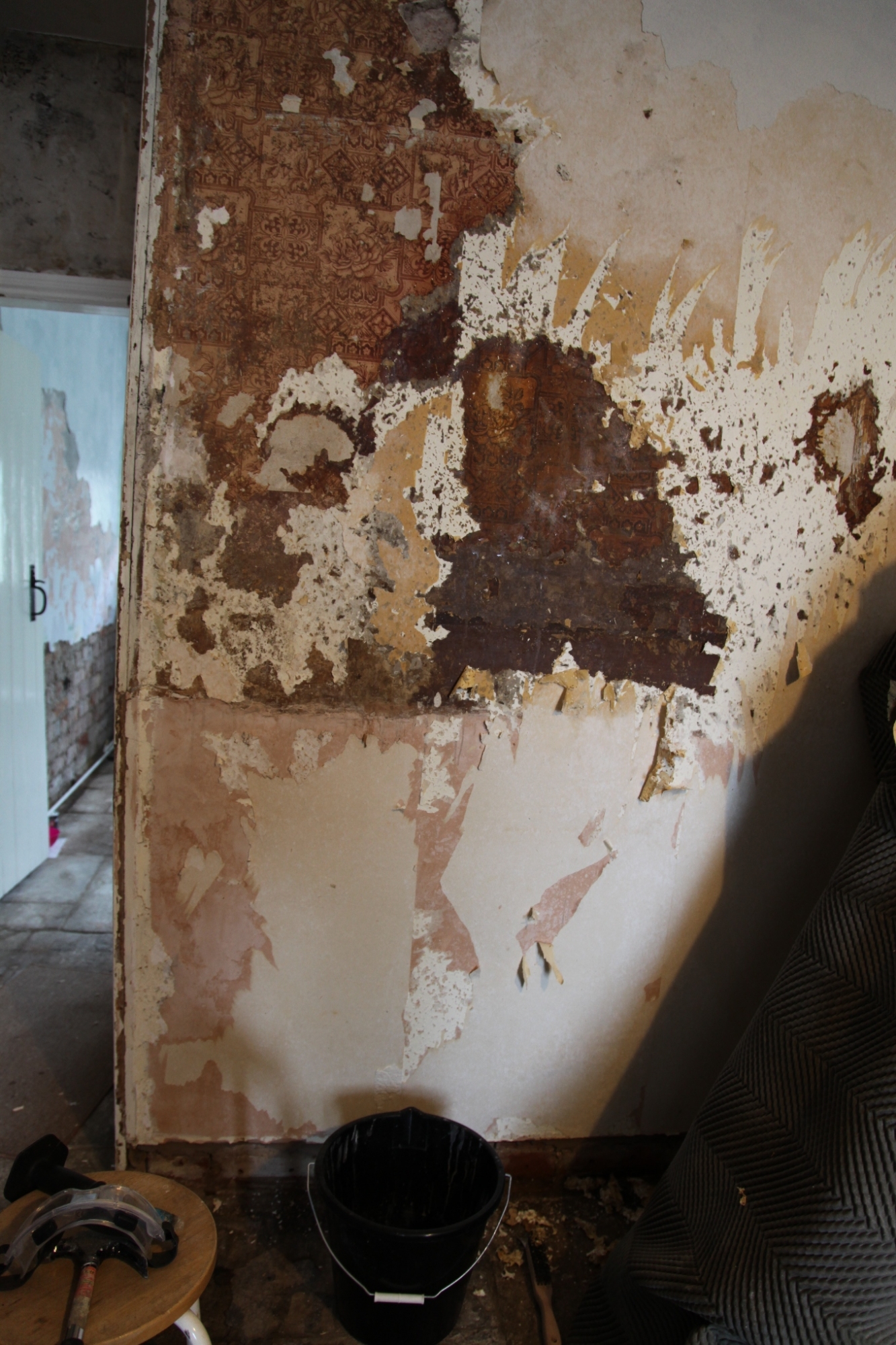
Modern gypsum plaster causing soaking wet walls
Another view of the walls – this time showing the modern abomination still in place at the bottom of the wall – this was stripped after the photo was taken.. The white / grey coloured material amongst the brown Victorian paint is the original lime plaster – still perfect.
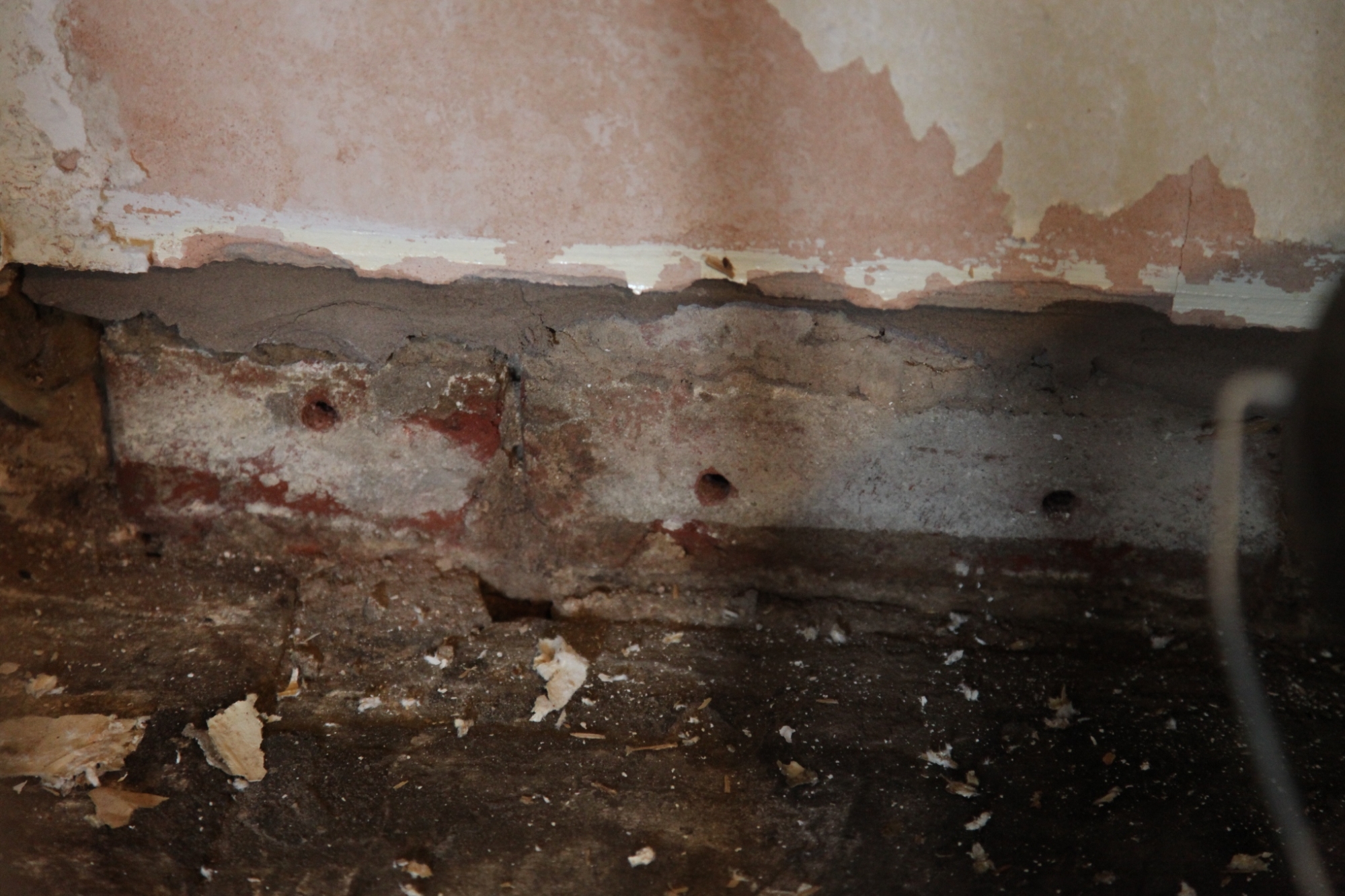
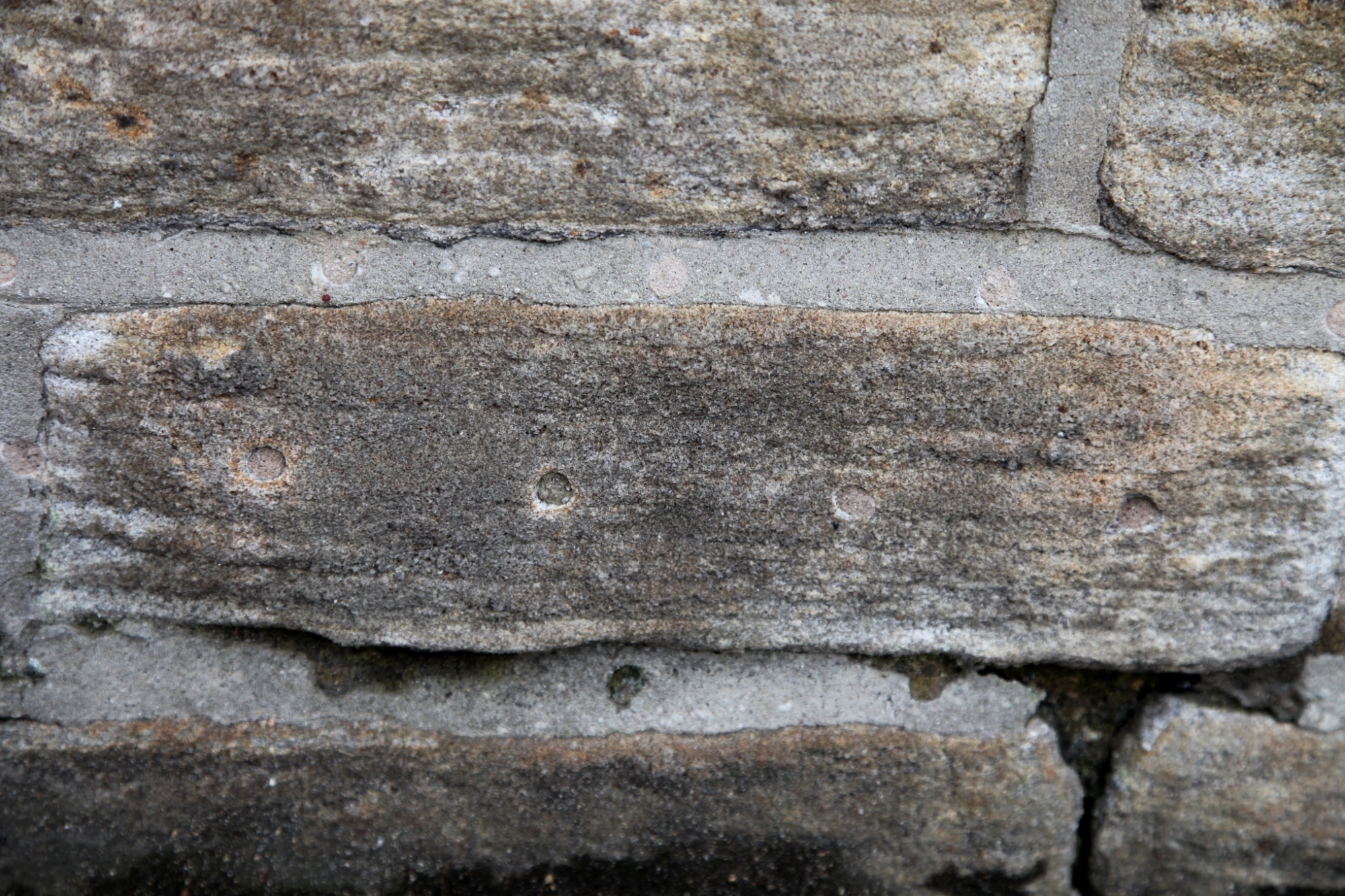
Multiple Injection Damp proofing holes defacing a beautiful stone cottage
Three sets of injection damp proofing holes are apparent on the stonework of this cottage. You would think that by the time the second set had been injected, someone would have woken up to the fact that it doesnt work. Trouble is… why should they – its good money fleecing folks again and again for something that never worked in the first place…