
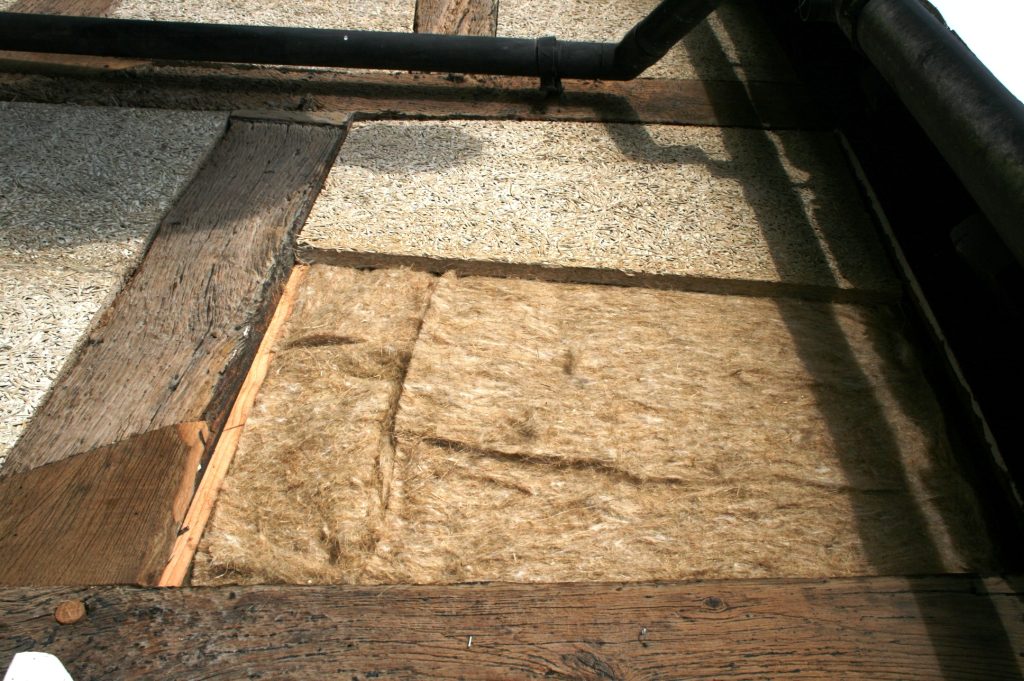
Insulating an old house is a seemingly simple thing. Chuck some batts in the loft and forget it. Or is it?
Insulating old houses is actually a very technical area. For every change you make to an old house, something happens – there is a reaction – not always a good one. We now know that there are well over 1000 unintended consequences to anything you do within an historic building. The most problematic area is that of insulation and breathability. Modern insulation is usually non-breathable – for example Kingspan.
The process of insulating increases heat retention. Your house gets warmer. Great – so now we can also dissolve more water in the air. We have just created a greater likelihood that condensation will form in cold spots. The more you heat it, the more likely you will experience damp problems. If your house is totally breathable – and well ventilated – it is unlikely you will suffer any problems. In reality, most old houses have been interfered with – lime plaster was removed, gypsum smeared all over the walls, and now the wall can only trap moisture, instead of allowing to pass harmlessly through it as vapour, on its way outside, through the mortar joints. Similarly, if you re-point in cement, that vapour can’t get out through the joints, and the wall gets wet, and the bricks will blow apart and spall. Even worse, you have cement render all over the outside, and the rot REALLY sets in – remember that Cob Walled house that collapsed in Cornwall recently? That was the ultimate in a cement rendered house that got wet – cob turns to mud, and the house just melted away.
A lot of historic building advice is centred around these inextricably linked issues of heating, breathability and insulation. The most important thing to remember is this:
Constant low temperature heating is better than on-off heating
Sheepwool insulation is far better than fibreglass or foam. The reason for this is that sheepwool is able to obsorb and hold small amounts of moisture, letting them go again as conditions change. Other forms of insulation – in particular fibreglass or rockwool, are very prone to condensation. Remember they are glass – so if you subject glass to moisture – you get condensation. If that moisture stays elevated for any period of time, mould begins to grow. this is why loft spaces are such horrible places – over years, all that fibreglass insulation has become coated with mould.
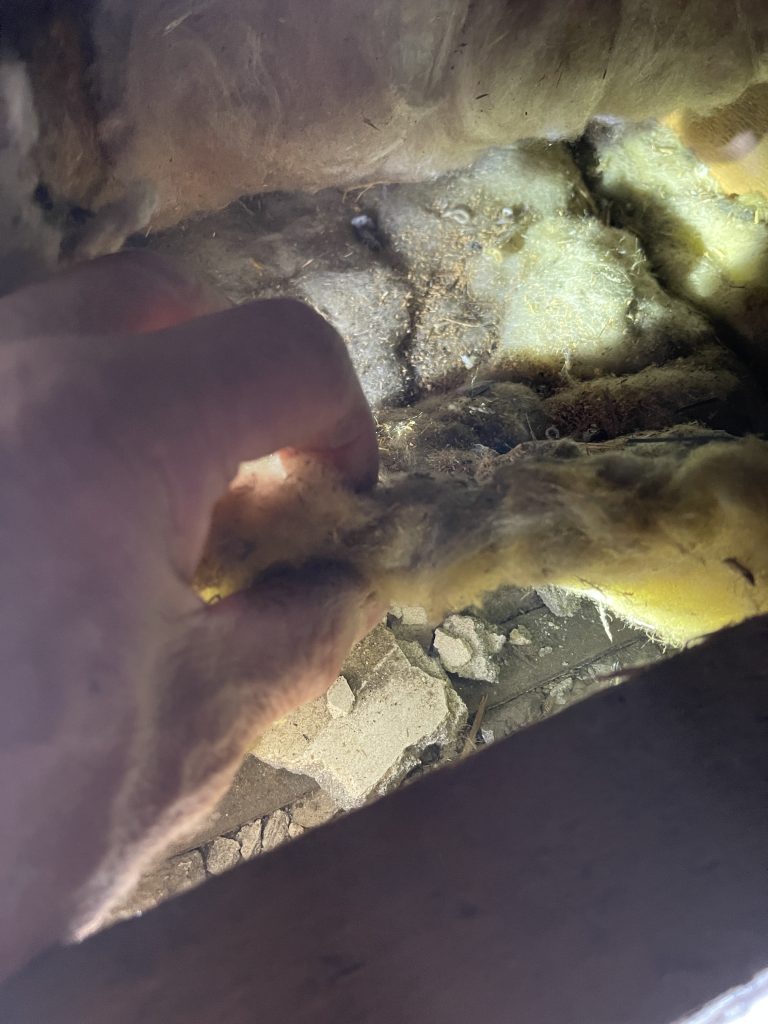
Lifting fibreglass insulation here, to expose grey material underneath – older fibreglass, saturated with toxic mould. It has held moisture against the timber, raising water levels, so it becomes attractive to beetle – hence the wood frass by my fingers. This was all removed, and the area cleaned with HEPA filtration vacuum, to remove toxic mould. It was replaced with sheepwool.
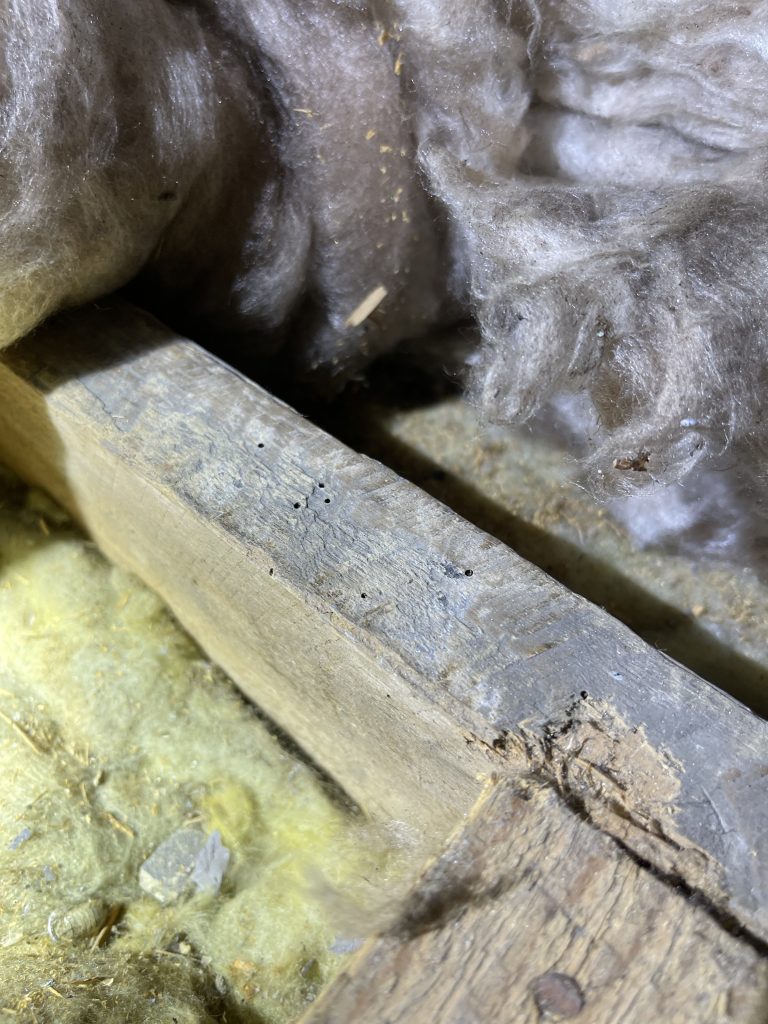
Mould has formed in the fibreglass, which has attracted condensation. This makes the timbers slightly damp, and encourages beetle (woodworm). Note the grey fibreglass rolled back, and beetle holes in the timber – with frass in the fibreglass.
This is indicative of two things:
Poor ventilation in the loft space, so moisture not able to escape.
Too much moisture in the rooms below, moving into the loft through the ceiling.
Ventilation is essential – but it should be humidity controlled (We often use RHL products)