Thermographic Surveys being used to fraudulently diagnose 'rising damp'
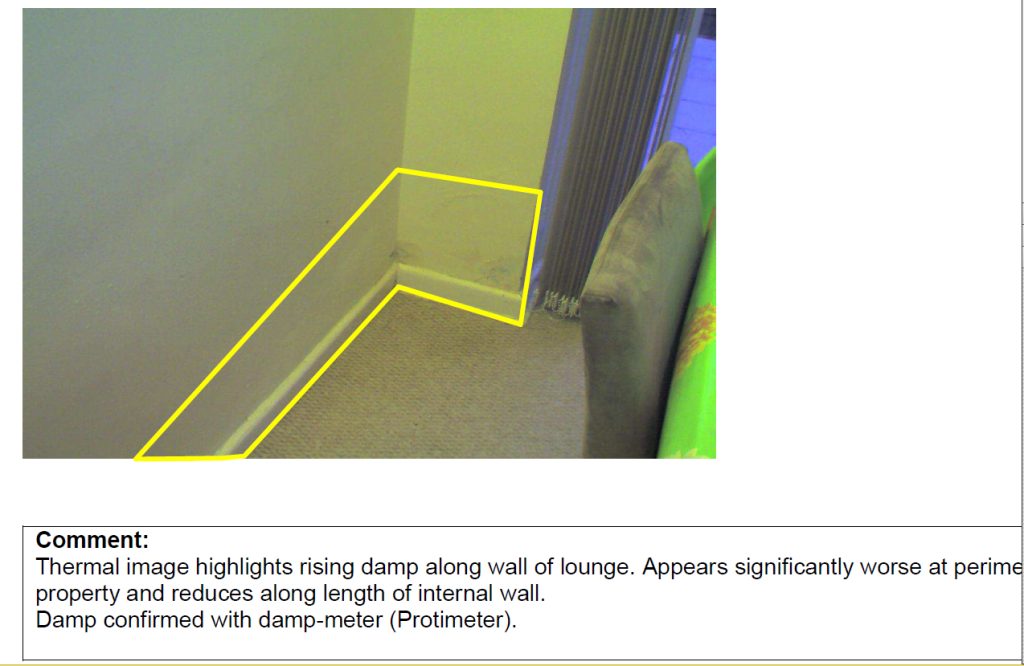
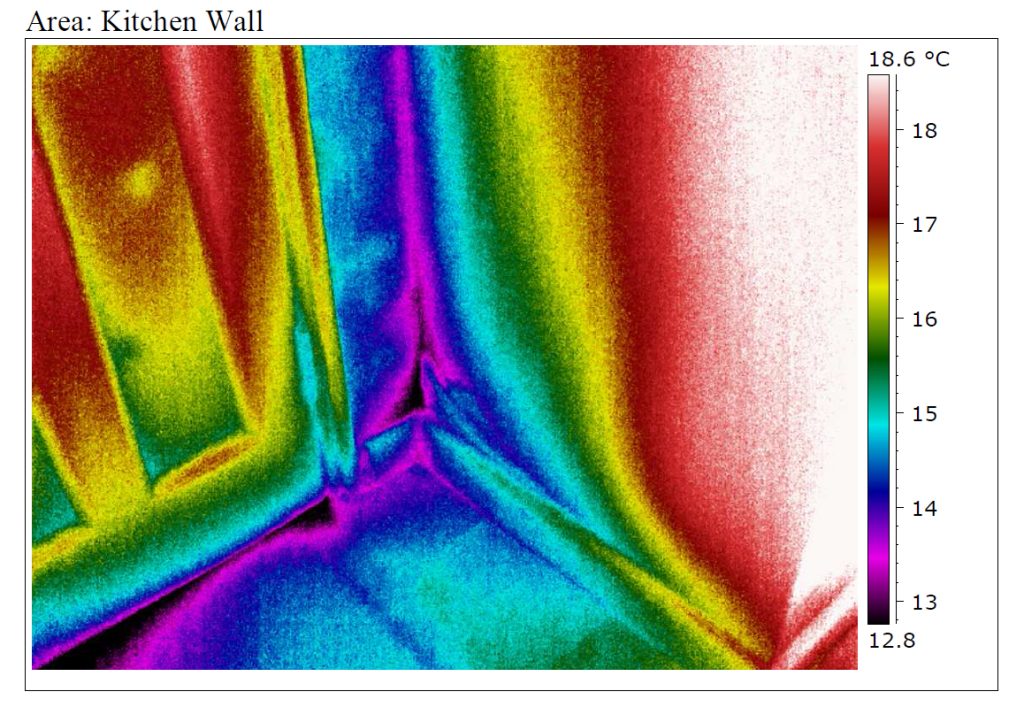
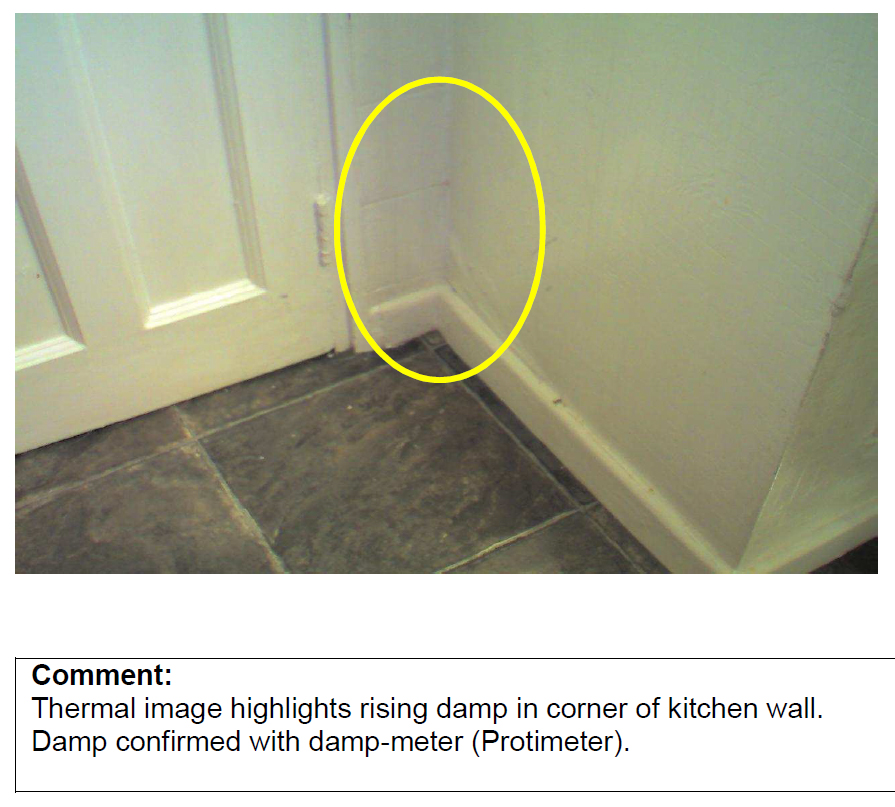
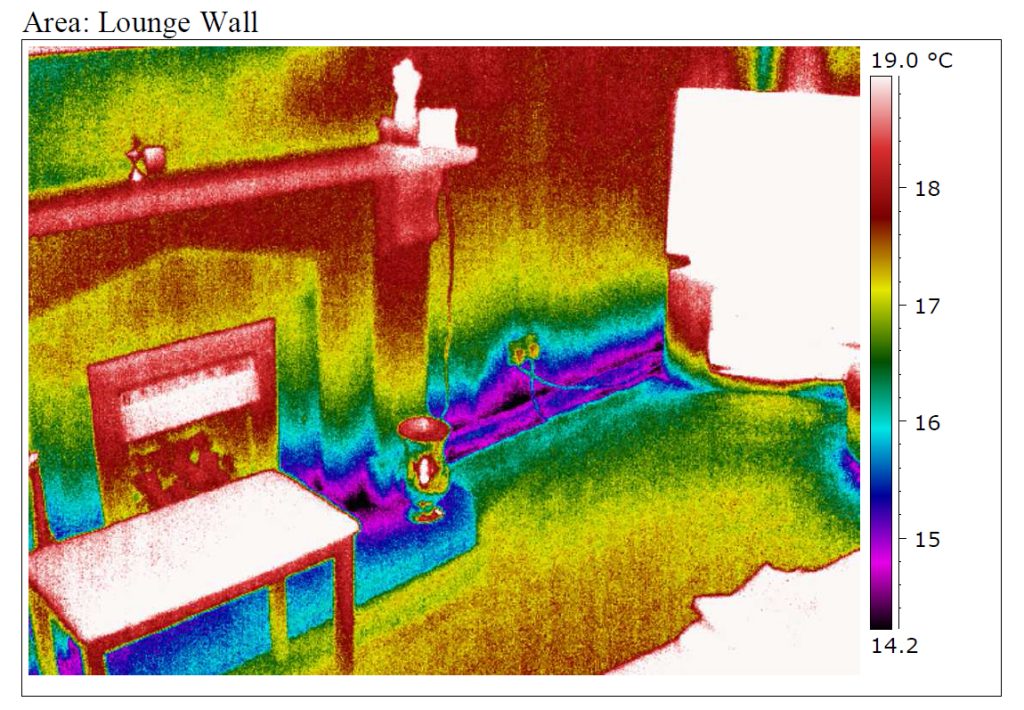
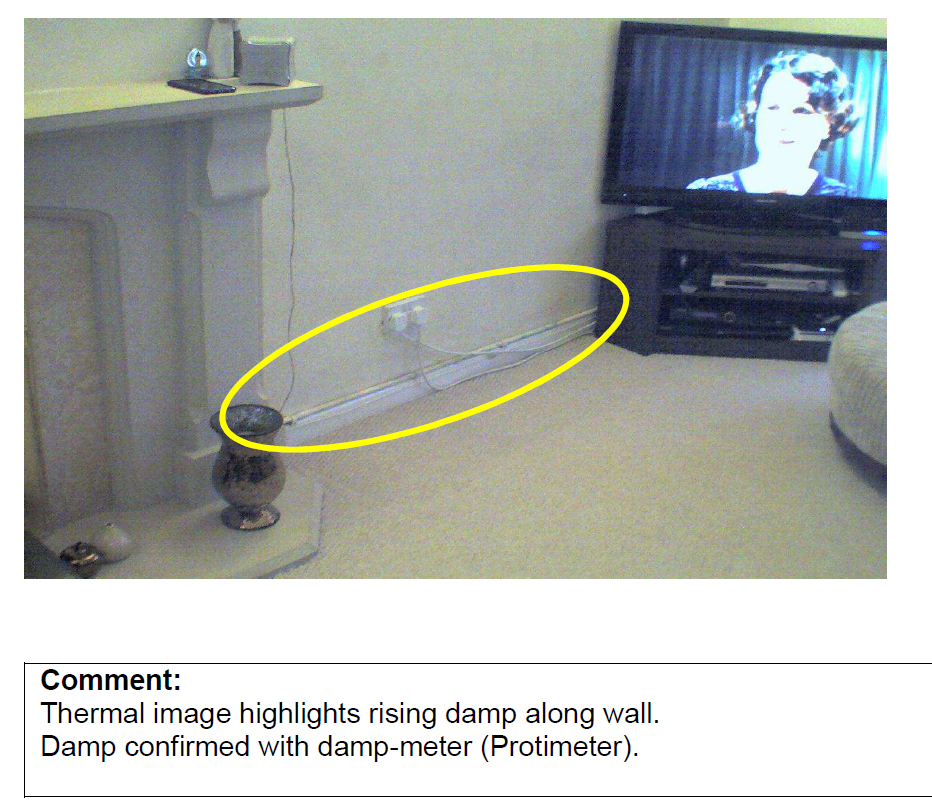
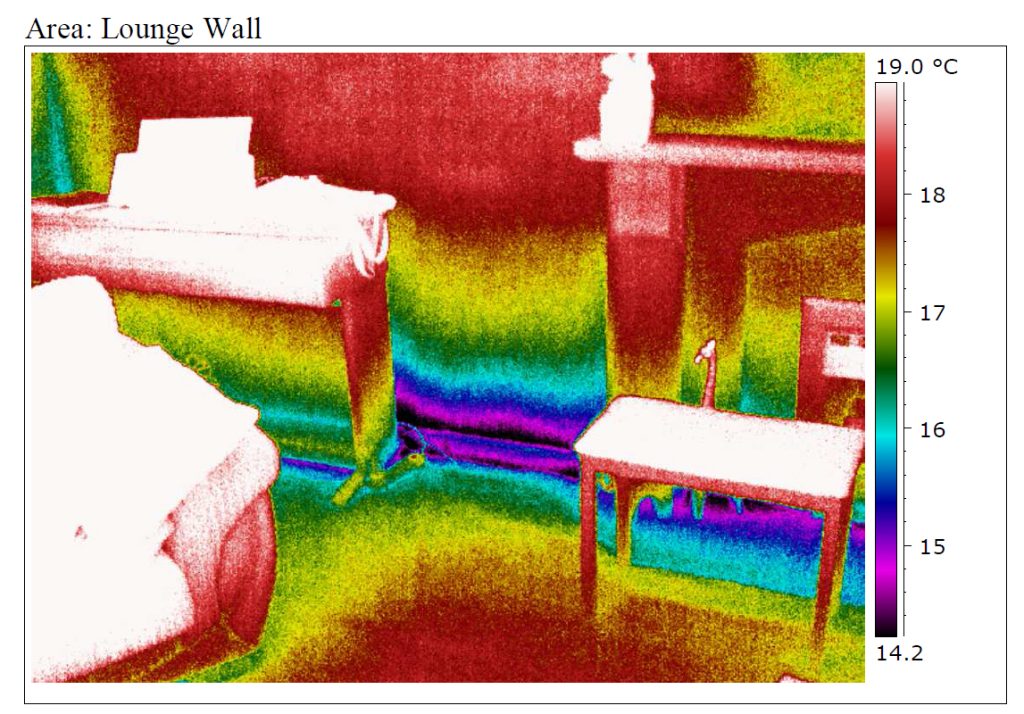
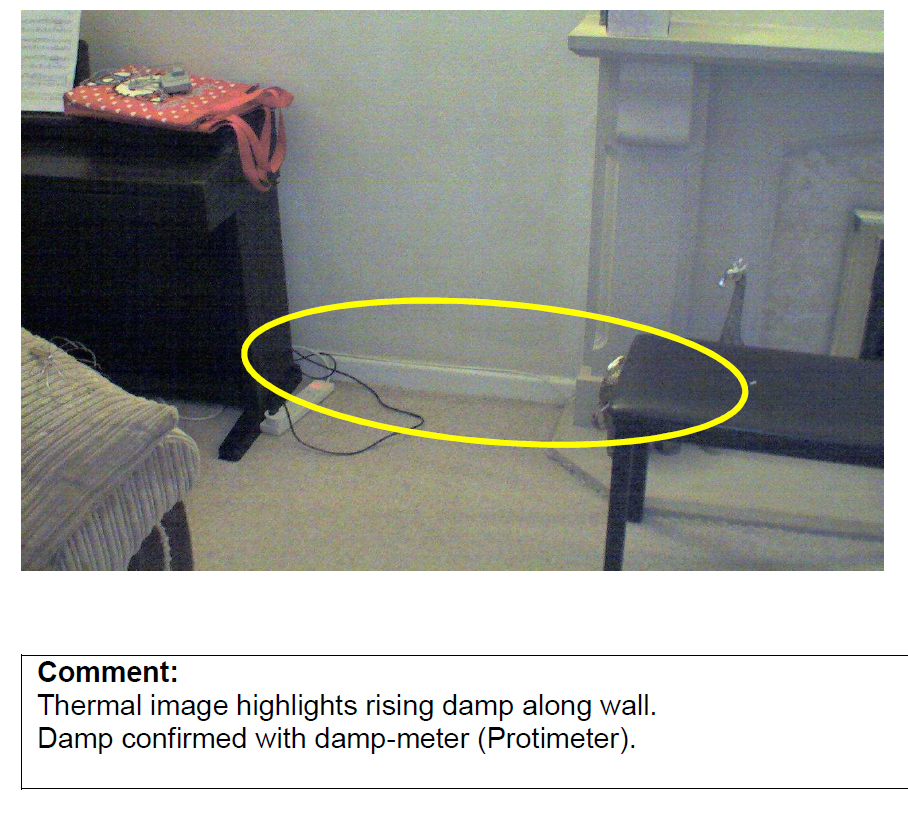
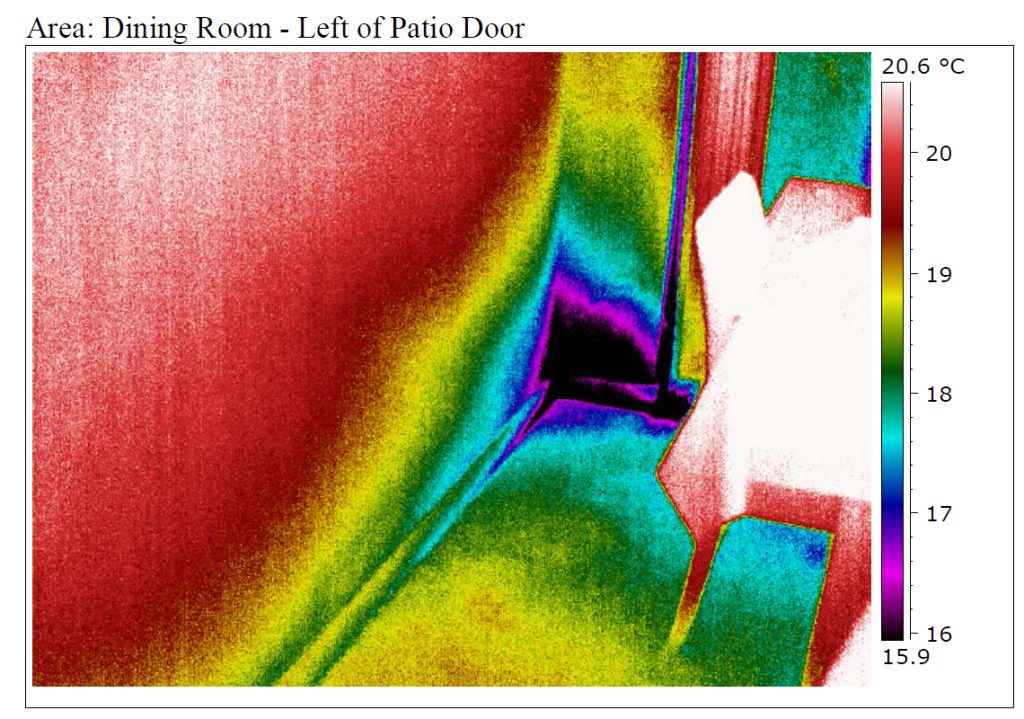
This thermal imaging survey was done by an insurance company, who paid an independent company to undertake a ‘thermal imaging survey’ supposedly to find out the cause of damp in a house. It is a brilliant example of the new wave of complete idiots who are going out diagnosing, you guessed it, rising damp. But this time they are using thermal imaging cameras. They work for insurance companies. Who don’t pay out on claims for ‘rising damp’. So the Surveyor – who in this case calls himself an ‘ITC Level 2 Certified Thermographer’ – takes a few images, claims they are rising damp, and sticks a ‘damp’ meter in the wall to confirm it.
He even manages to take images clearly showing the same ‘edge effect’ which is nothing to do with temperature, and runs along the corner of the wall and into the fireplace – then across the other wall in into the piano. Everything in his path is diagnosed as ‘rising damp’ – as is the external wall next the door. External walls get cold. They especially get cold at ground level – which is what is shown in these images. There is no rising damp – just a bit of condensation causing wallpaper to peel away from the wall at low level. Considering the house was built in 1950, the paper aint done bad. The plaster is fine.
We did carbide tests of the walls, and found them dry.
We DID find damp – in the middle of one of the floors, where concrete was so thin, it was wet. The floor will be repaired. There is no rising damp in this house – it is bone dry, with low relative humidity, and no evidence of any dampness problems with the exception of a bit of peeling wallpaper. We did find out there were blocked drains too – which has almost certainly created high moisture content under the floor slab, exacerbating the problem with the floor.
A great example of how not to do it. And a worrying example of how a new breed of idiots (or perhaps just very convincing scammers) are running around still trying to convince people this mythical ‘rising damp’ thing exists. The fact that they are being paid by insurance companies to produce pretty pictures which convince the poor home owner that they have an ‘uninsurable problem’ is very worrying – I’d say this is ‘fraudulent misrepresentation’ and certainly needs reporting to the insurance ombudsman.
If your insurance company declines a claim on the basis that it is ‘Rising Damp’ – feel free to contact us. The fact that an insurance company is refusing to consider a claim on the basis that they have diagnosed a non-existent phenomenon is more than worrying – it is fraud. Insurance companies want to try and avoid any claims for water damage (which you are covered for under ‘escape of water’) but you are not covered if they can prove it was not an escape of water but ‘rising damp’. We deal with numerous examples of this happening – and in nearly every case there is a perfectly rational cause for the symptoms we see – sometimes, insured, and sometimes unfortunately not insured. But at least if we assess the case, you have a chance of a valid claim, and in any event will know exactly what is happening with your home.