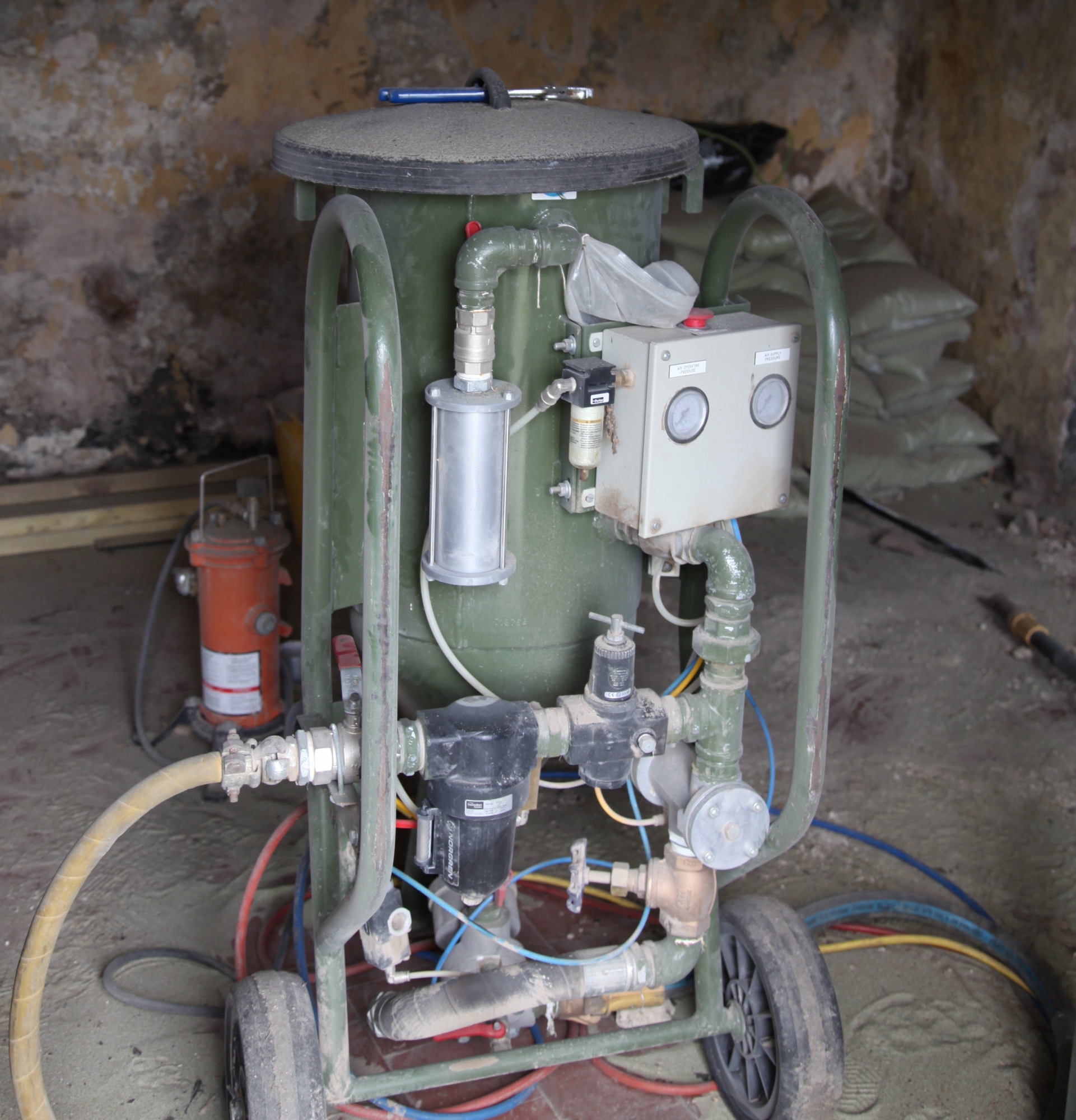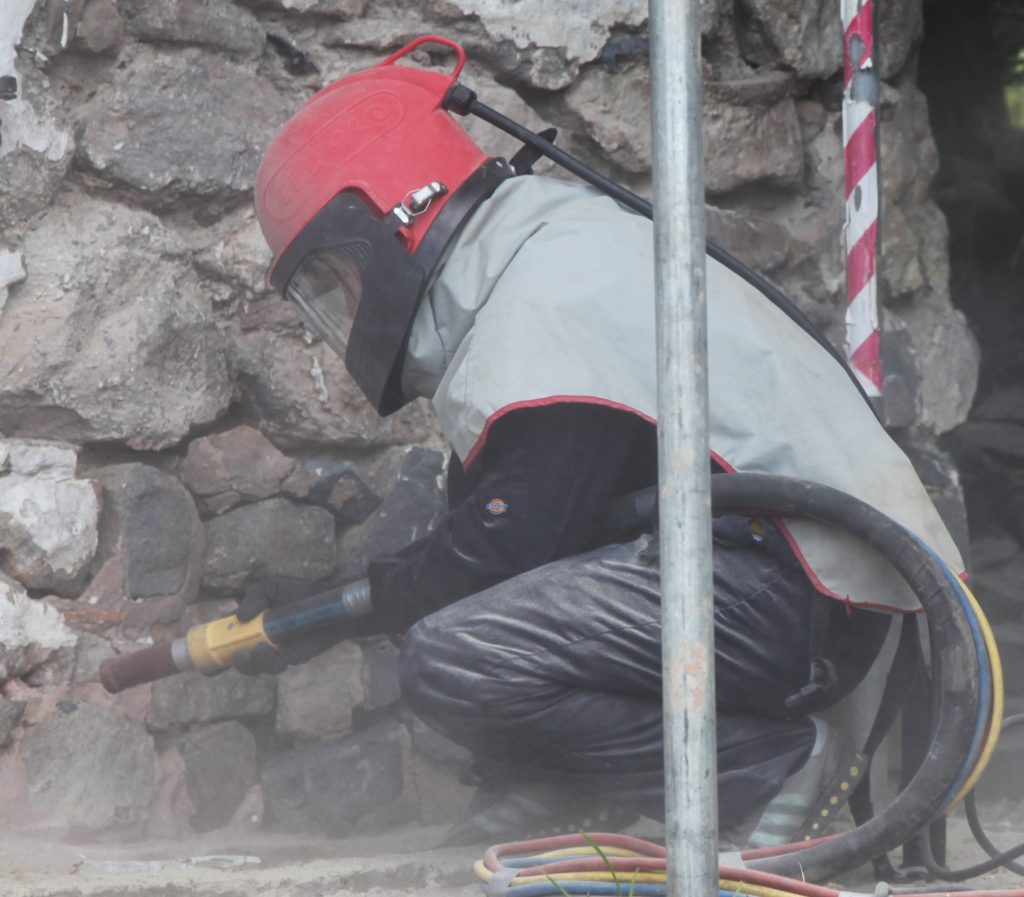
Removal of paint and graffiti from almost any surface is a breeze. The SoftClean unit allows us to use very low air pressure and delicate abrasives to gently tease paint and tar deposits from old timber.
We are able to remove paint from window frames without even damaging the glass – this is especially valuable when cleaning paint and rust from cast iron windows. Conventional sandblasting equipment is far too abrasive, and damages historic timber – we have been working with the manufacturers of the equipment to ensure that we have complete control over how much material is removed, and to minimise any damage to historic fabric.
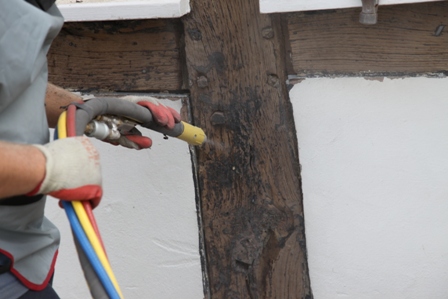
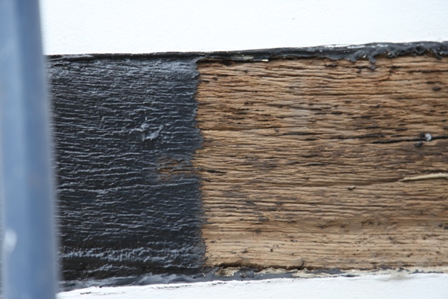
Blast Cleaning old oak beams
Some of the abrasives we use include sodium bicarbonate (baking soda!) and calcite (very soft material which is softer than the oak timber we often clean – so minimises any abrasion to the surface) It has been a big investment for us, but we are already achieving spectacular results. We will add some case history photos shortly.
A recent demonstration, at which a Conservation Officer was closely involved, resulted in her request for help with her own home. So – if you were thinking about sandblasting oak beams, or sandblasting paint off a brick wall, give us a call, and we will show you how this can be done with minimal damage to historic fabric.
If you need blasting work done, we can recommend very good operators to do this – email peter@heritage-house.org and we’ll make appropriate introductions!
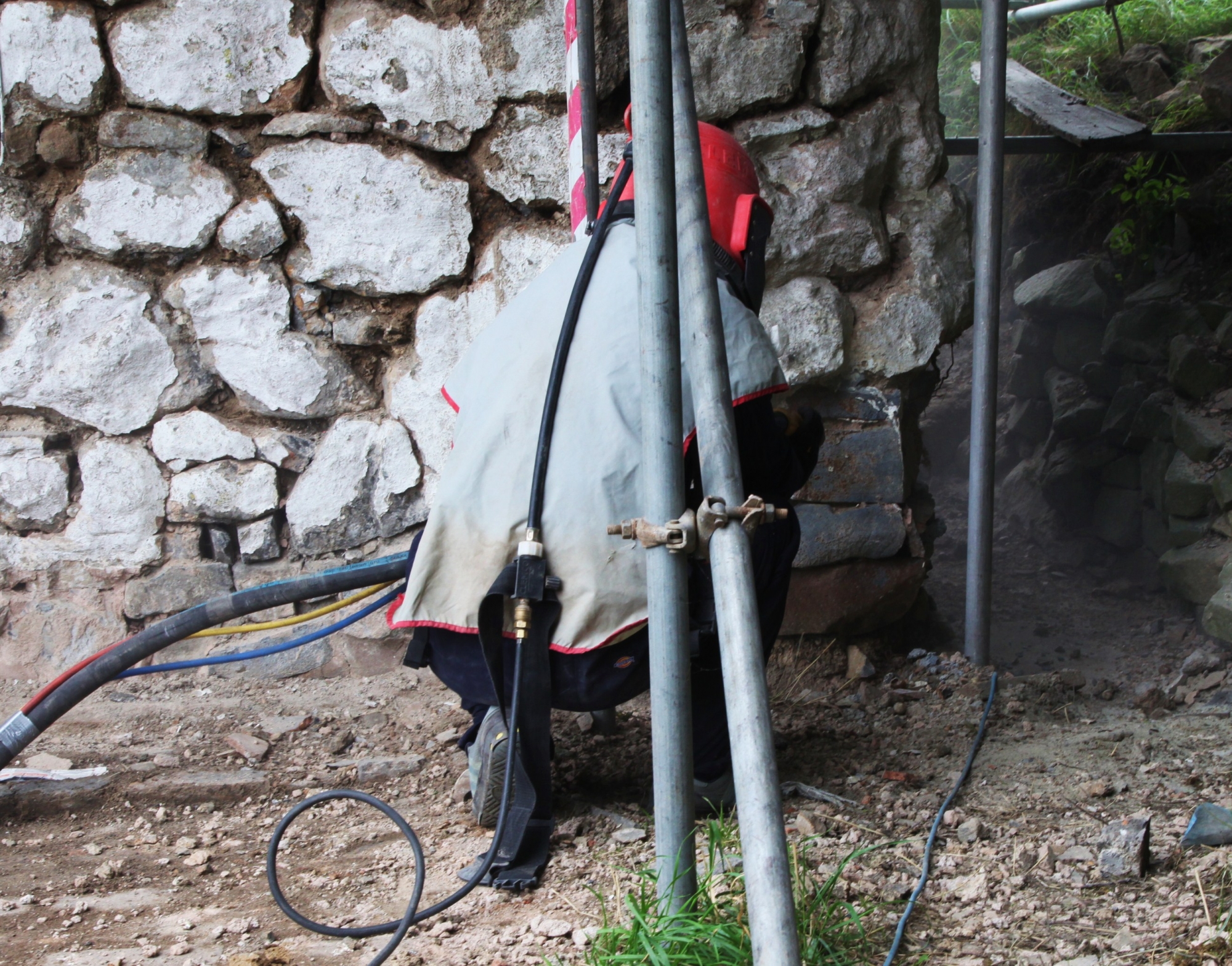
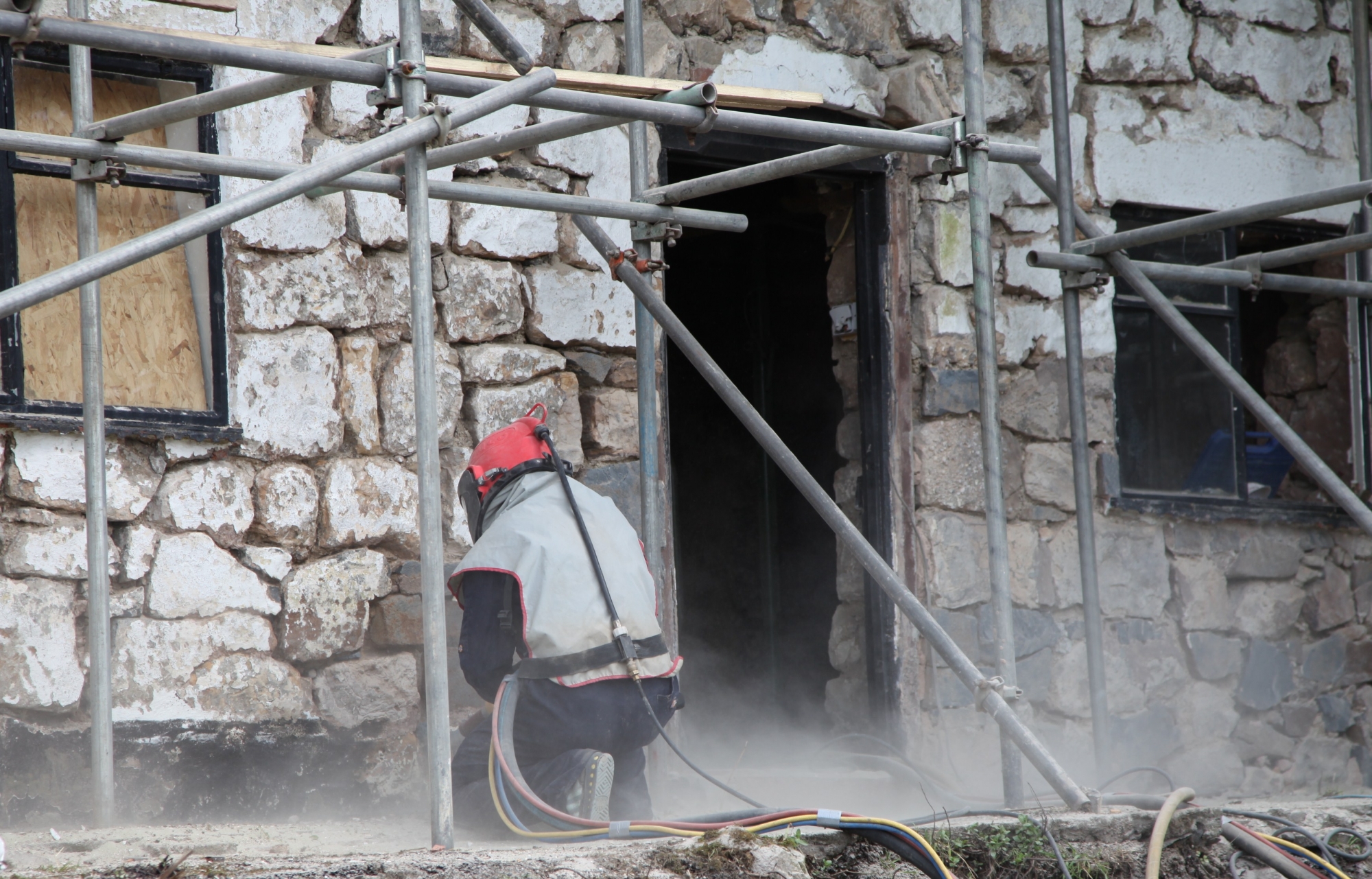
Removing thick masonry paint from ancient stone walls…
How is it done?
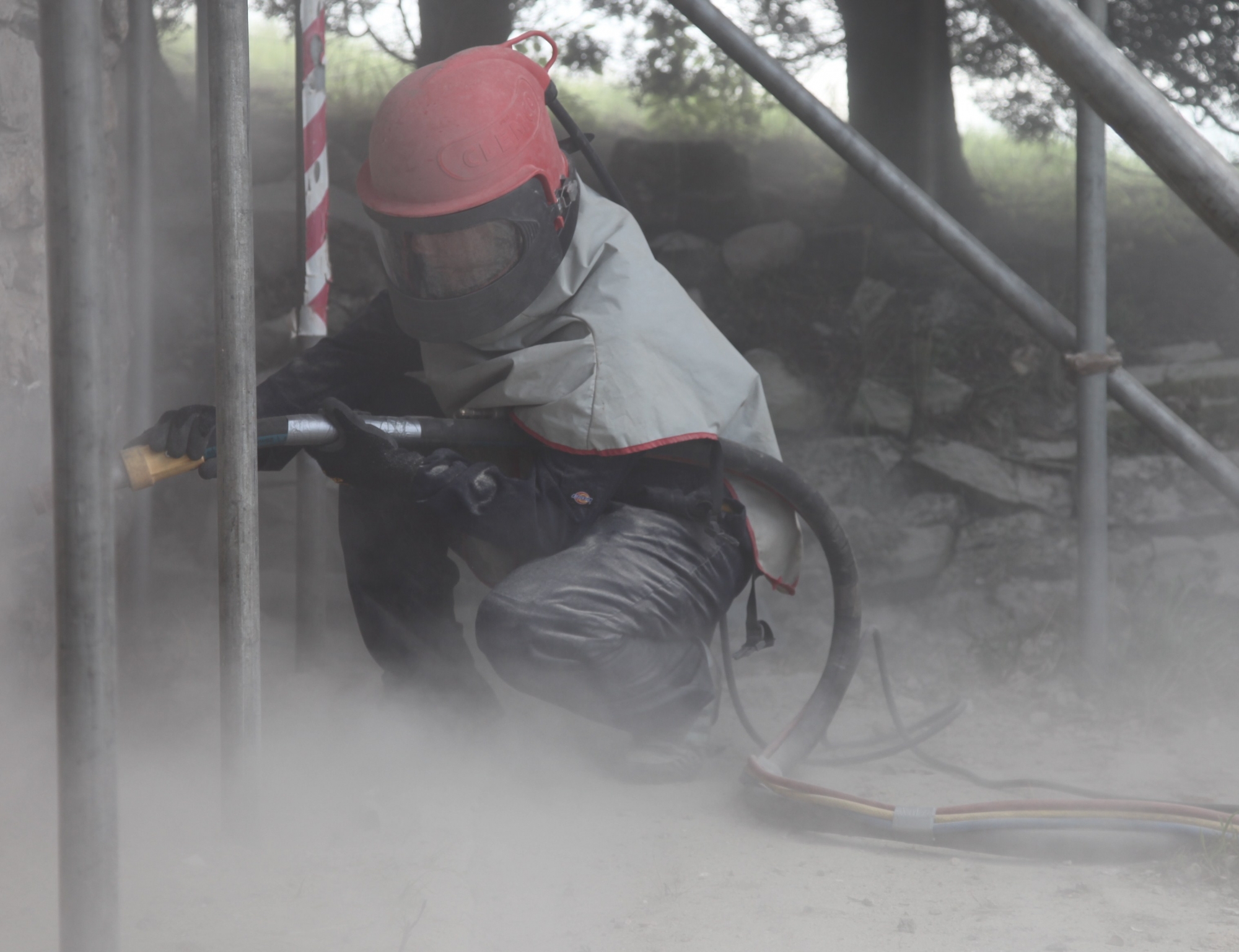
Most cleaning techniques use air blast of some sort. We use a specially designed unit which blasts different types of grit at the material we want to clean. We can vary the pressure and amount of grit to make sure we dont damage delicate materials. Grits can be very soft – we use Soda ( Baking powder!) for cleaning window frames without damaging the glass. Timber tends to need harder grits – heavy paint on top of oak, for instance, would probably need fine glass grit. There ARE methods which use water – we dont like them – some manufacturers claim it cuts dust problems – it does, but fine grit and material being removed are easily ingrained in the substrate and are almost impossible to remove afterwards. I personally don’t like to get timber wet, or even damp, during the cleaning process…
Its very hard to cost blasting work on historic buildings. You have to work carefully, slowly teasing dirt and paint away from the substrate. It can take minutes or days, depending on the materials you are dealing with. In general, the harder and more brittle the material to be removed, the easier it is to get off. Plastic paints are dreadful to get rid of – they are soft and pliable, and grit tends to bounce off them. For this reason, it is hard to price jobs accurately – we charge on a day rate for a crew and machinery with abrasive grit. After the first few hours, its usually very obvious how long its going to take, and how hard the job will be.