Hartlebury Castle

Documents repairs to the Hurd Library ceilings at Hartlebury Castle, including decorative plasterwork and damaged lath and plaster.

Independent guidance from Heritage House 3 min read

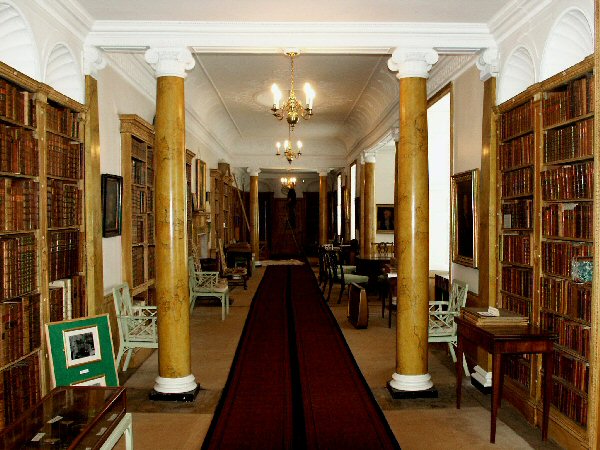
The library was built in 1782 by Richard Hurd, who was Bishop of Worcester for 27 years. Shropshire architect James Smith built the library over the 17th century Long Gallery in the Castle below. The plaster ceiling is by James Bromfield, of Shrewsbury.

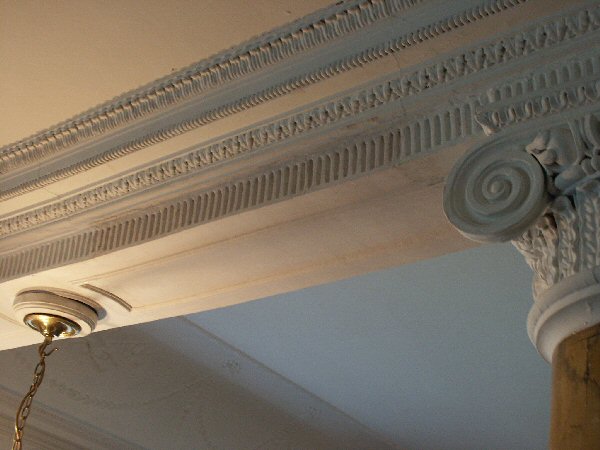
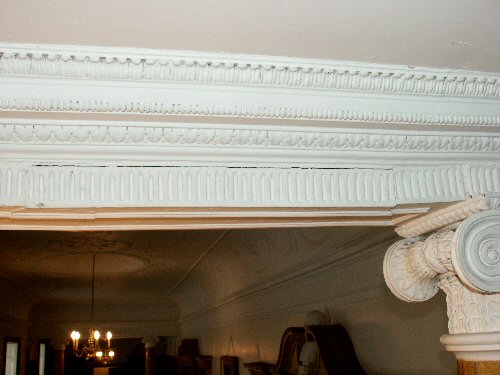
Beautifully detailed cornice was separating from the lath due to deflection in the beam on which it applied. Much of the plasterwork to the ceilings was cracked and moving, due mainly to the inferior quality of the ceiling joists. Close examination of the timbers above the library revealed that many of them were re-used timbers even when the library was built, and had cracked and sagged over the years.

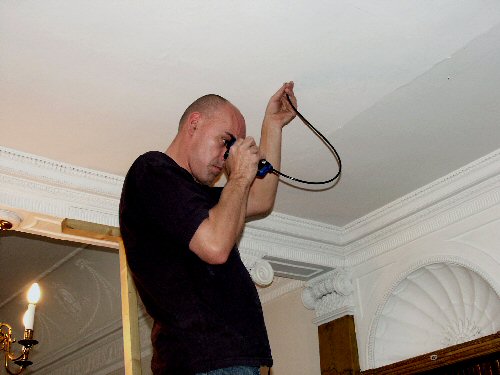
In the recent past (probably the early 1970’s, water damage required ceiling repairs, which were carried out using modern plasterboard and plaster finish. Here, holes have been drilled through the ceiling to insert the borescope – this allows us to examine the condition of the beams holding the ceiling, and check whether the lath has separated from them. In this case, both beams and lath appear to be sound, and the deflection seen in the ceiling is probably due to the age of the beams, the weight of the ceiling, and weight of the flat lead roof above..
Cracked Beam
Borescope
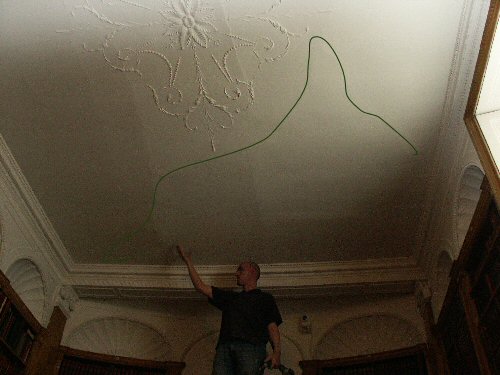
Ceiling Outline
The outline on the ceiling shows the area of modern plasterboard – ripples on the surface are a tell-tale sign of modern trowel finish using gypsum based plaster. Luckily these repairs have hardly touched the stucco pattern, which will be relatively easy to restore.. Deflection of the beam above Jim's head can be clearly seen.
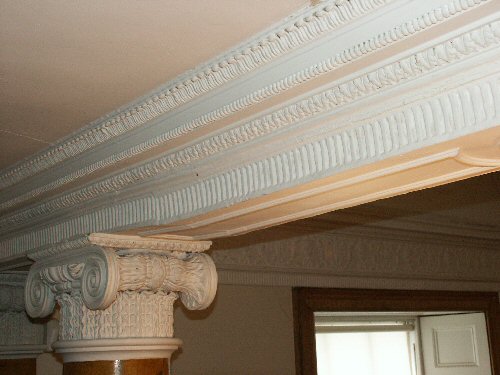
Beam Detail
Movement in the beam can be clearly seen here, together with the effect of repairs made in the past which were not very expertly done. The columns are not load bearing, and are themselves works of art – lath applied to a timber frame, and lime plastered, with a painted finish. the detail and quality of the plaster work in these is superb.

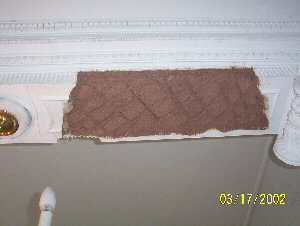
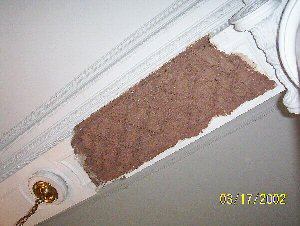
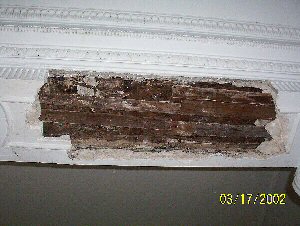
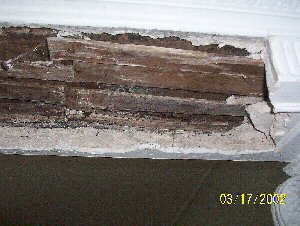
The project has now been completed. When the broken section of plaster was removed, it revealed sloppy workmanship dating to 1782 when the plasterwork was applied. The plaster had no horsehair in it, making it brittle and easily broken. The first stage of repair was to remove the damaged section and examine the lath it was formerly attached to:
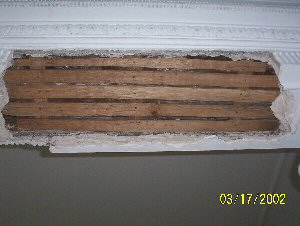
Old Lath
Old lath revealed after cutting away plaster. Note old nails holding lath to beam which have rotted away, allowing lath to detach.
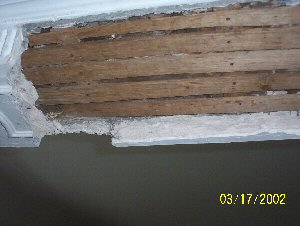
Old Lath Closeup
Close up, showing thickness of undercoat plaster and pale coloured topcoats
New Lath
New lath applied over the old to avoid disturbing plaster still attached to it further along beam.
New Lath Closeup
Close up, showing lath firmly nailed to counter lath, and ready for scratch coat of plaster to be applied.
Scratch Coat
Scratch coat of lime plaster with horsehair applied to lath. This is left for a few days to cure before applying second coat.
Scratch Coat
Another view of scratch coat ready for second coating.
Finished Beam
The final product, allowed to dry out for a few weeks before painting