Tugford Church

Follows conservation work at Tugford Church, including lime pointing, limewash, roof repairs and a limecrete floor.

Independent guidance from Heritage House 3 min read

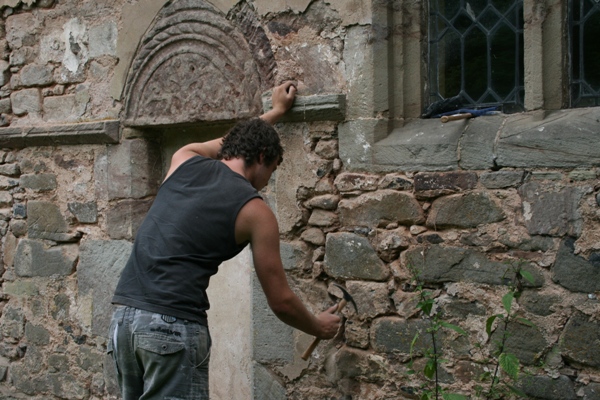
Raking out Joints

The bell tower of this beautiful Saxon church – with Norman additions – had a leaky roof and crumbling plasterwork. Together with a new set of bells, we have overhauled the roof and re-pointed and limewashed the interior of the tower. Later, we excavated the floor, and put down a limecrete floor, with underfloor heating and stone slabs.
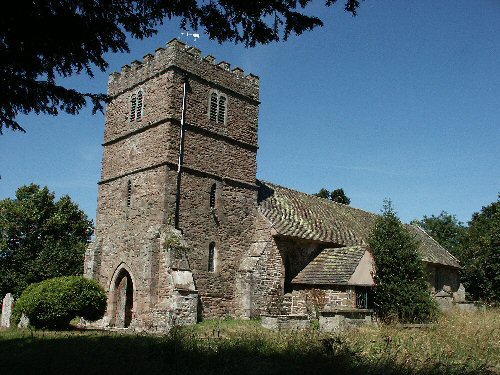
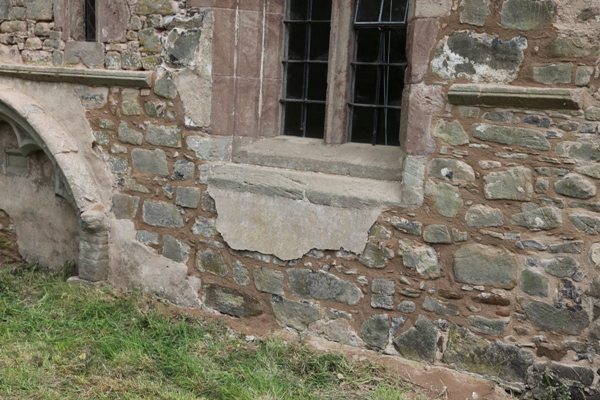
Exterior of Tugford Church

Outside Work

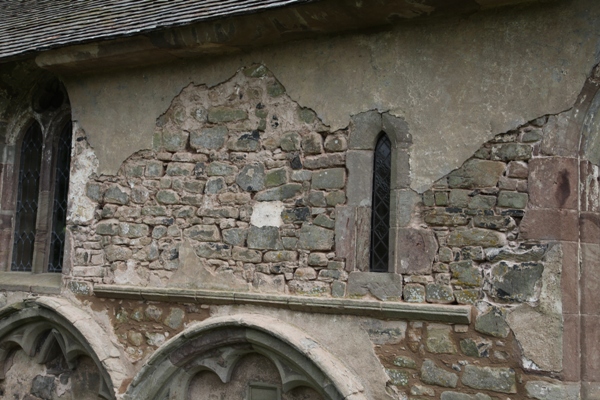
This is a most unusual example of a stone building which still retains some of the original exterior hydraulic lime render which has protected the building for centuries. The scaffold was erected in July 2006 to allow essential repairs to the lead work and tiles of the tower roof.
Outside Walls
Scaffolding to the belltower allowing works to the roof and walls – these involved repointing in lime mortar, and repairs to the leadwork of the parapet walls
Raked out Pointing
Mortar joints raked out and ready for repointing in a soft hydraulic lime mortar
Stone walls repointed
Stone walls repointed with a soft hydraulic lime mortar which is mixed using a reddish local gritty sand to replicate the original..

Cleaning and Limewashing the walls – removing the damp problems

The walls to the tower were damp and mouldy. They were scrubbed down, and outside the tower drainage was installed to carry away rainwater. Internally the walls were given 7 coats of limewash.
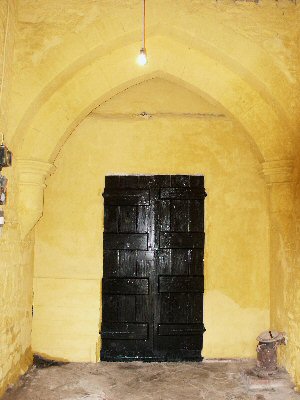
Doorway
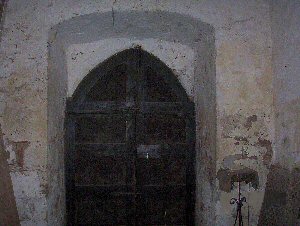
Old oak doorway to the belltower
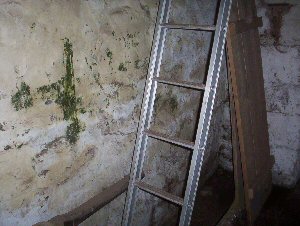
Damp walls in the belltower
Damp walls at the base of the belltower as a result of high ground levels outside
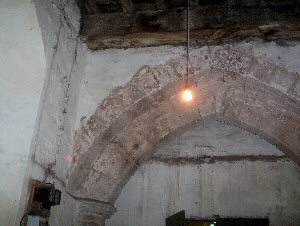
Norman Arch
The Norman Arch before restoration
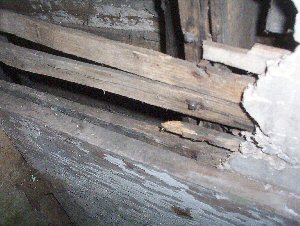
Lath and plaster damaged in the belltower
Lath and plasterwork was damaged by dampness which had allowed beetle attack to the lath. This was replaced and re-plastered in lime.

Limewashing the Belltower

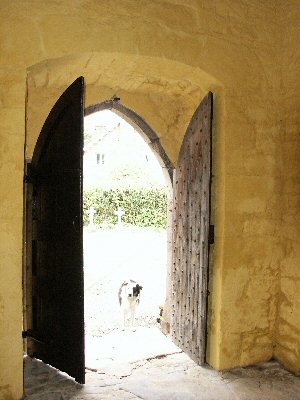
Limewashed entrance
Limewashed walls and repainted doors
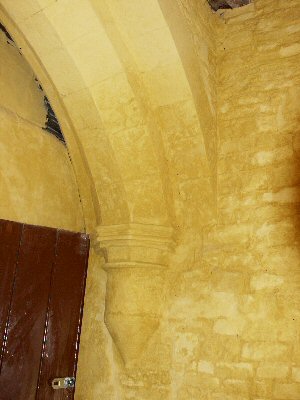
Arch Detail with limewash
The Norman Arch with its new coats of limewash
Front Doors
Finished limewash to the portal of the tower
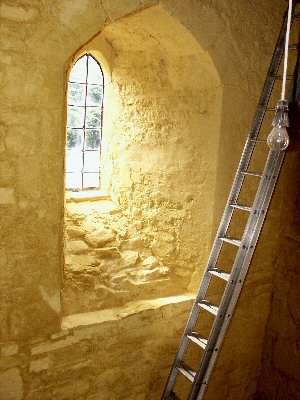
Window
Window in the tower, after cleaning and limewashing.

Restoring the Bells at Tugford Church

Tugford Church was in decline until a local businessman got together with some of the locals and devised a strategy for restoration which involved re-hanging and restoring the bells to enable bellringing to take place. There is now an enthusiastic bunch of bellringers at the Church, and they frequently play host to guest ringers from other areas. Part of this strategy involved re-laying the floor as an insulated and heated limecrete slab.
Old Bell at Tugford Church
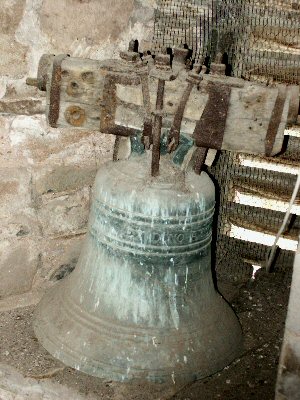
One of the six bells waiting to be re-hung. This one is so heavy that two strong men can't even move it off the floor. 3 new bells are being cast to complete the peal. The frame on which the bells are to be hung is substantial for obvious reasons.
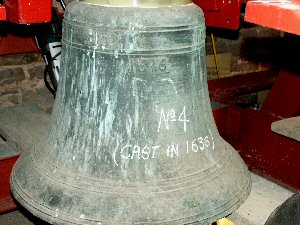
Bell at Tugford Church cast in 1636
One of the bells was inscribed, indicating it had been cast in 1636. Sobering to think just how old this is, and how many people have rung it and listened to its chimes..
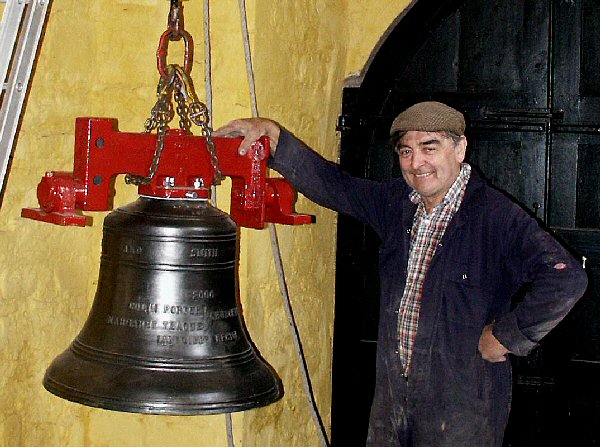
Bill - with one of the new bells at Tugford
Bell Master, Bill with the commemorative bell bearing the names of the Church Wardens – Colin Porter and Maggie Teague, who organised the restoration work.

Lifting and fitting the Bells at Tugford..

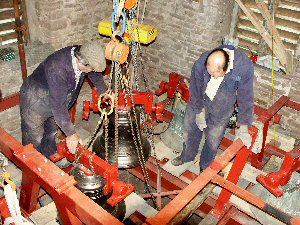
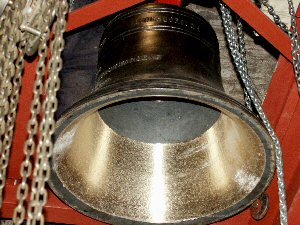
The massive steel frame on which the bells sit, is held in place by several tonnes of concrete poured as a ringbeam around the walls of the tower. Each bell is tuned by removing tiny amounts of swarf from the inside, until the exact tone is reached.
Cradle for the new bells
Lifting one of the bells into position on the new frame
On the way up - new bell being lifted into the tower
Another new bell being lifted into position in the tower